Congo confirms 17th Ebola outbreak, killing 65. Remote Ituri province faces logistical and containment challenges.
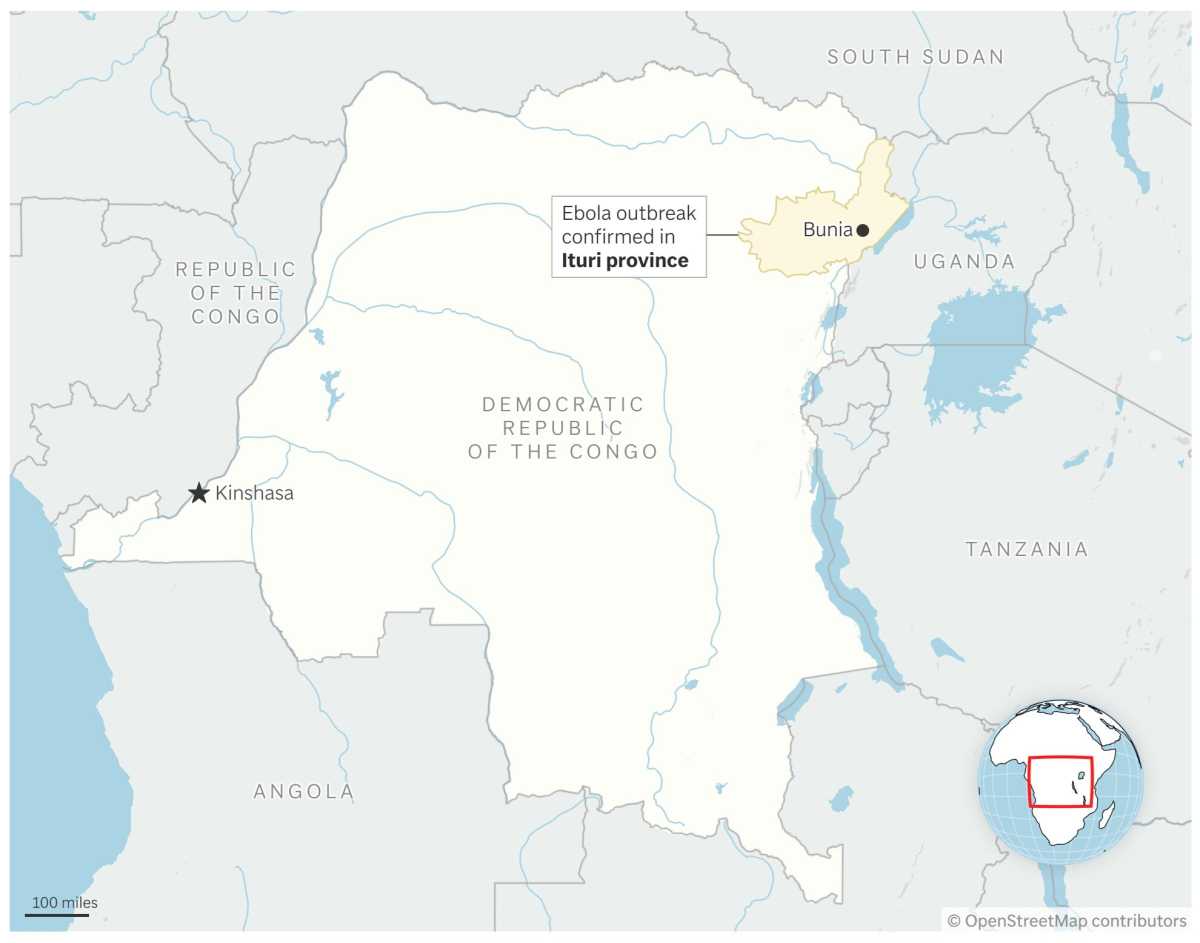
Congo's top health body has confirmed a new Ebola outbreak in the country's remote Ituri province, marking the 17th since the disease first emerged in 1976. As of Friday, there have been 246 suspected cases and 65 deaths reported, according to the Africa Centers for Disease Control and Prevention (Africa CDC). The outbreak is centered in Mongwalu and Rwampara health zones within Ituri province.
The new Ebola strain appears to be a non-Zaire variant, with sequencing results expected within the next 24 hours. This unusual strain raises concerns among public health officials as it differs from previous outbreaks that were primarily caused by the Zaire strain. Dr. Gabriel Nsakala, a professor of public health involved in past responses, the initial treatments are symptomatic and more detailed information about the vaccine will be available once the specific strain is identified.
The outbreak is occurring in a remote part of Congo with poor road networks, making it challenging to contain. Ituri province borders Uganda and South Sudan, adding further risk as people move between these countries. The proximity of affected areas to border regions has led health authorities to worry about potential spread through population movement and attacks by armed groups.
Efforts are underway to contain the outbreak, with an urgent high-level coordination meeting convened on Friday involving health officials from Congo, Uganda, and South Sudan. Key partners include U.N. agencies and other countries. Despite logistical challenges due to bad roads and long distances, Congo has a wealth of experience in handling past Ebola outbreaks.
The World Health Organization (WHO) previously provided support during the 2018-2020 outbreak with a stockpile of treatments and vaccines. However, these are specific to the Zaire strain, which is different from the current non-Zaire variant. Funding has also been an issue in previous responses, including concerns about recent U.S. funding cuts.
The containment efforts will focus on immediate response priorities, cross-border coordination, surveillance, safe and dignified burials, and resource mobilization. With a high level of expertise and existing infrastructure such as laboratories, the challenge now is to quickly deliver necessary resources and treatments.
Ebola transmission primarily occurs through contact with bodily fluids and contaminated surfaces. Symptoms include fever, vomiting, diarrhea, muscle pain, and in severe cases, internal and external bleeding. The virus was first discovered near the Ebola River in Congo in 1976 and has since caused significant outbreaks in Central Africa, often occurring in remote areas near tropical rainforests.
The ongoing outbreak highlights the need for continued vigilance and preparedness to manage future disease threats effectively.