Discover how hippocampal ripples and replay enable the brain to recombine past knowledge for flexible planning, according to a study published in Nature Neuroscience.
The human brain excels at solving novel problems by flexibly recombining a limited set of familiar elements. Recent neuroscience research suggests that this process involves the coordinated activity between two key brain regions: the hippocampus and the medial prefrontal cortex (mPFC). A recent study conducted by researchers from Beijing Normal University, the Chinese Academy of Medical Sciences, and other institutions sheds light on how these regions work together to combine past knowledge into new configurations. The findings, published in Nature Neuroscience, reveal that this process is supported by brief bursts of high-frequency neural activity in the hippocampus known as hippocampal ripples and the replay (re-activation) of past experiences.
According to Li He, Xiongfei Wang, and their colleagues, "The human brain excels at solving novel problems by flexibly recombining a limited set of familiar elements, often through the internal planning of sequences that assemble these elements into new configurations." The hippocampus plays a crucial role in memory formation and spatial navigation, while the mPFC supports decision-making, planning, reasoning, and information integration.
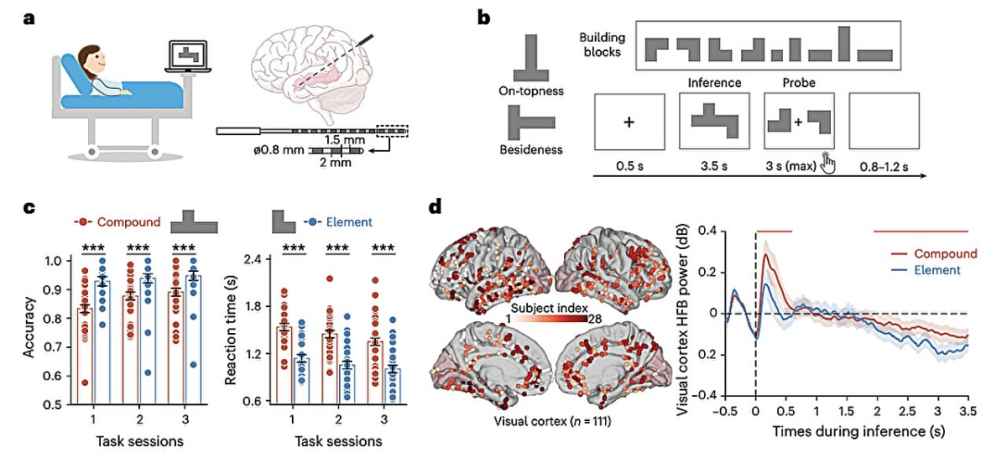
To investigate how the hippocampus and mPFC interact to support flexible planning, He, Wang, and their team recruited 28 patients with epilepsy who had electrodes implanted in their brains as part of their treatment. These participants were asked to complete two tasks that required them to mentally combine familiar elements into new configurations. The researchers analyzed brain activity recordings collected by the implanted electrodes during these tasks.
The study revealed that short bursts of brain activity, or ripples, in the hippocampus appear to help reorganize stored memories. During ripple events, the brain replays sequences of information, rapidly reconfiguring familiar building blocks into new combinations useful for solving problems. Concurrently, the mPFC updates its activity patterns to represent newly identified solutions.
The authors found that "Hippocampal ripples shift mPFC representations toward the inferred relational configuration, facilitated by replay that reorganizes building blocks into candidate sequences." Replay is strongest during ripple periods and closely coordinates with mPFC activity. This coordination predicts efficient inferential behavior, suggesting that hippocampal ripples and replay are key mechanisms for dynamically updating cortical representations online to support planning and inference.
This study offers new insights into how the human brain flexibly combines past knowledge to tackle new tasks or problems. Further research could explore these neural mechanisms in more depth, potentially shedding light on neurological diseases and psychiatric disorders associated with difficulties in planning or reasoning. Additionally, understanding these processes may inspire the development of artificial intelligence systems that emulate how the brain recombines previously acquired information.
As we continue to uncover the intricacies of human cognitive function, studies like this one provide valuable insights into how our brains adapt and evolve to meet the challenges of a rapidly changing world.