A new comprehensive analysis suggests that weight cycling is not as harmful as commonly believed, challenging public messaging and clinical advice.
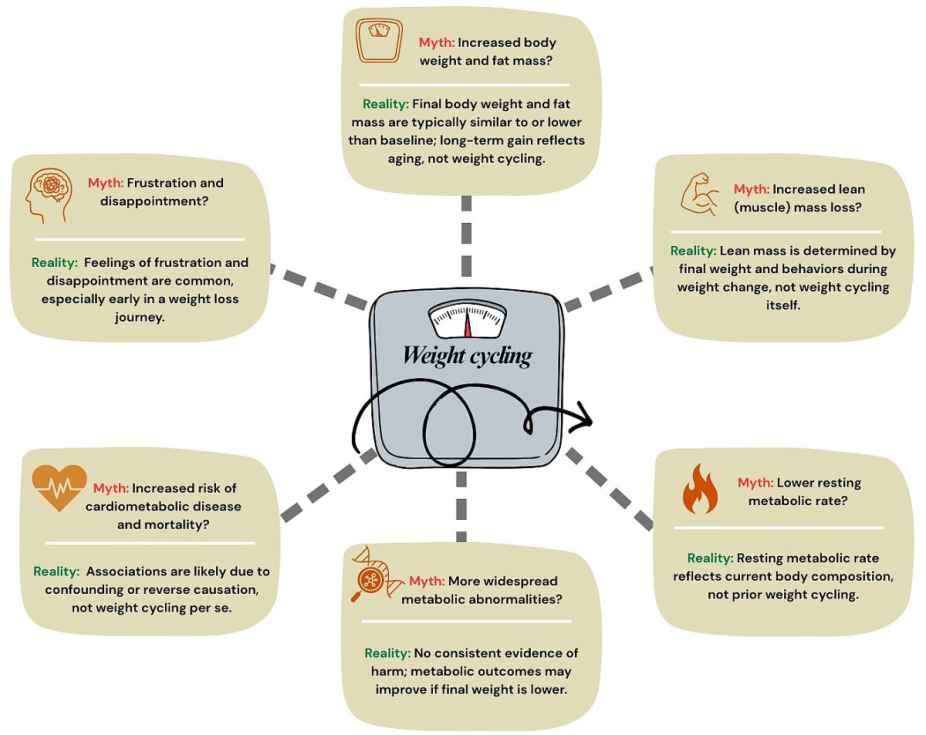
Is 'yo-yo dieting' really harmful? This question has long been a subject of debate in the realm of weight management. For decades, weight cycling or repeated cycles of losing and regaining weight have been blamed for various adverse outcomes such as increased fat gain, accelerated muscle loss, reduced metabolic rate, and higher risk of diabetes or cardiovascular disease. However, a new analysis published in The Lancet Diabetes & Endocrinology challenges these longstanding assumptions.
The review by Professors Faidon Magkos from the University of Copenhagen and Norbert Stefan from the German Center for Diabetes Research (DZD) critically examines decades of research on weight cycling in humans and animals. Their findings indicate that there is no convincing causal evidence linking weight cycling to long-term harm among patients with obesity.
"Many people struggling with weight are discouraged from trying to lose weight because they fear 'yo-yo dieting' will lead to muscle loss and somehow damage their metabolism," says Prof. Magkos. "Our review suggests these fears are largely unsupported. In most cases, the benefits of trying to lose weight clearly outweigh the theoretical risks."
The authors carefully evaluate observational studies, randomized clinical trials, and animal experiments that examine how repeated weight loss and regain affect body weight, body composition, energy metabolism, and glucose regulation. They find that once pre-existing health conditions, aging, and overall exposure to obesity are properly accounted for, the supposed harmful effects of weight cycling largely disappear.
Importantly, studies that objectively track body composition show no consistent evidence that weight cycling causes disproportionate loss of lean (muscle) mass or long-term suppression of metabolic rate. In most cases, people who regain weight return to a body composition similar to their starting point - not a worse one.
Nor is there any robust evidence suggesting that weight cycling is behind the lifelong increase in weight often experienced by patients with obesity. Weight regain reverses many of the benefits of weight loss, such as improvements in blood sugar, blood pressure, and lipid levels. However, this does not imply that a person is worse off than before they lost weight in the first place.
"The idea that 'yo-yo dieting ruins your metabolism' is not supported by robust evidence," says Magkos. "Trying - and even failing - to lose weight is not harmful. But giving up altogether may be."
These findings are especially timely given the rapid rise of highly effective weight-loss drugs, such as GLP-1 receptor agonists. These treatments can lead to large weight losses, followed by substantial regain if medication is discontinued - a pattern that mirrors weight cycling.
The authors argue that this should not be viewed as evidence of harm. Instead, intermittent weight reduction - even if not permanently maintained - can provide meaningful periods of improved metabolic health and quality of life.
In conclusion, the new analysis reassures patients and clinicians that people living with overweight or obesity should not be discouraged from pursuing weight loss, even if long-term maintenance proves difficult. The idea that 'yo-yo dieting ruins your metabolism' is not supported by strong scientific evidence. Trying - and even failing - to lose weight is not harmful.
Publication details: Faidon Magkos et al, Is weight cycling clinically harmful?, The Lancet Diabetes & Endocrinology (2026). DOI: 10.1016/s2213-8587(26)00037-9
Journal information: The Lancet Diabetes & Endocrinology
Key medical concepts: Obesity, Cardiovascular Diseases, Diabetes, GLP-1 Receptor Agonist [EPC]
Clinical categories: Weight management, Endocrinology, Healthy living