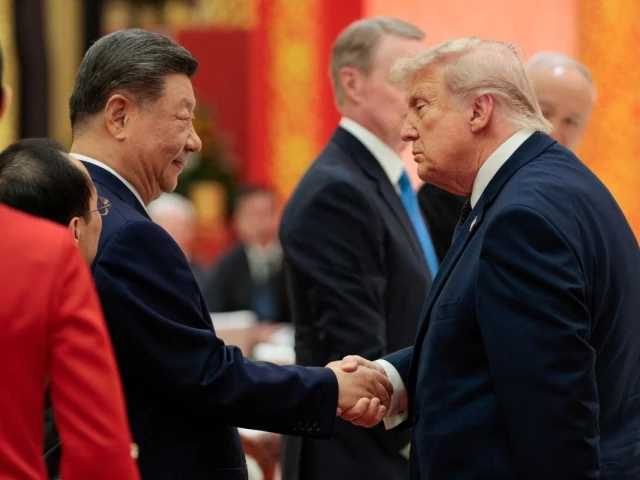
President Xi Jinping compared US-China relations to the 'Thucydides Trap' during his summit with Donald Trump. Learn what this term means and its relevance in modern geopolitics.
In his speeches and meetings with foreign leaders, Chinese President Xi Jinping often references classical maxims or poems from ancient China. On Thursday, however, he chose to compare the US-China relationship to the "Thucydides Trap," a political term coined by an American scholar based on an account of the Peloponnesian War by ancient Greek historian Thucydides.
During his high-profile summit with US President Donald Trump, Xi raised a pressing question that has become central to modern geopolitics: Can China and the US avoid "Thucydides Trap"? But exactly what is "Thucydides Trap"?
Popularised by American political scientist Graham Allison, the concept of the Thucydides Trap refers to the heightened risk of war or serious conflict when a rising power challenges an established global power. The theory traces its origins back to the ancient Greek historian-philosopher Thucydides, who chronicled the Peloponnesian War between Sparta and Athens.
According to Thucydides, Sparta's fear of Athens' growing influence significantly contributed to the outbreak of war. In contemporary geopolitical discussions, the "Thucydides Trap" is often cited to describe tensions between a rising power - such as China - and a dominant superpower like the US. The theory warns that the rapid ascendance of a nation can create fear, mistrust, and strategic rivalry in the established power, which may increase the risk of conflict.
However, experts say that the trap is not a guarantee of war. Graham Allison himself has historical evidence shows several instances where rising and established powers successfully avoided conflict through careful diplomacy and strategic adjustment.
The remarks by President Xi come amid growing global attention on the evolving dynamics between Beijing and Washington. Analysts are watching closely to see whether diplomacy can prevent tensions from escalating into confrontation. As both nations seek to assert their influence in various regions, the "Thucydides Trap" serves as a stark reminder of the potential for conflict if not managed carefully.
As Xi seeks to strengthen China-US ties during his historic year, many will be watching to see how these diplomatic efforts play out and whether they can avoid the pitfalls of the Thucydides Trap.