The European Union-funded Deliver Justice Project has concluded its five-year term, marking significant improvements in access to justice and rule of law reforms across Pakistan, particularly in Islamabad, Balochistan, and Khyber-Pakhtunkhwa.
The European Union-funded Deliver Justice Project has successfully completed its five-year term, leaving a lasting impact on Pakistan's justice system. The project, which was jointly implemented by the United Nations Development Programme, the United Nations Office on Drugs and Crime, and UN Women, aimed to improve access to justice, strengthen people-centred services, and advance rule of law reforms across the country. With a strong focus on supporting justice and security institutions, civil society organisations, and local communities, the project operated in Islamabad, Balochistan, and Khyber-Pakhtunkhwa.
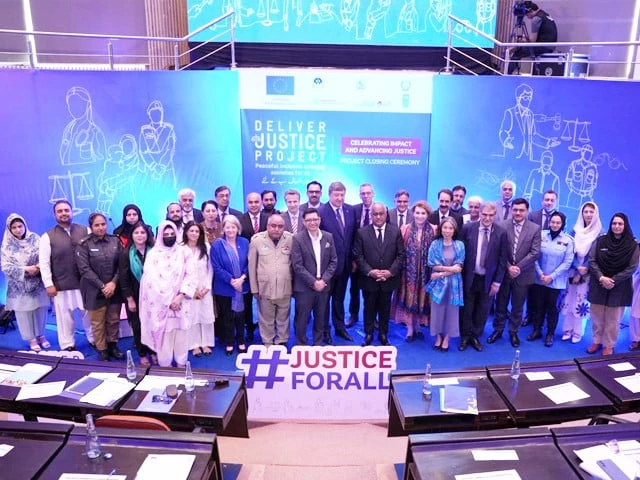
The project's closing ceremony, held in Islamabad, brought together a diverse range of stakeholders, including representatives from the Supreme Court, the Economic Affairs Ministry, provincial justice and security institutions, civil society, media, and community groups. The event provided a platform for these stakeholders to review the project's impact and partnerships, and to recognise the contributions of justice champions from Khyber-Pakhtunkhwa and Balochistan who have promoted inclusive and accessible justice services. European Union Ambassador to Pakistan Raimundas Karoblis reiterated the EU's commitment to supporting a more efficient, safer, and accessible justice system in Pakistan, highlighting the project's significant contributions to strengthening the justice sector in Khyber-Pakhtunkhwa and Balochistan.
The ceremony also featured testimonials from women lawyers, women police officers, and community members who have benefited from the project's legal awareness, legal aid, and justice services. These personal stories, showcased through an interactive Impact Hub, demonstrated the project's achievements and research findings, and provided a glimpse into the lives of individuals who have been impacted by the project's initiatives. The stories highlighted the project's efforts to promote access to justice, particularly for marginalised communities, and to support the development of a more inclusive and responsive justice system.
Supreme Court Justice Shahid Waheed, who attended the ceremony as chief guest, emphasized the importance of justice institutions in ensuring that justice remains accessible, inclusive, transparent, and responsive to society's needs. He justice institutions in developing democracies, such as Pakistan, carry an added responsibility to protect constitutional rights and reinforce public trust. Justice Waheed's remarks underscored the significance of the Deliver Justice Project's contributions to Pakistan's justice system, and highlighted the need for continued efforts to promote access to justice and rule of law reforms in the country. As the project comes to a close, its legacy is expected to continue, with its impact felt for years to come.