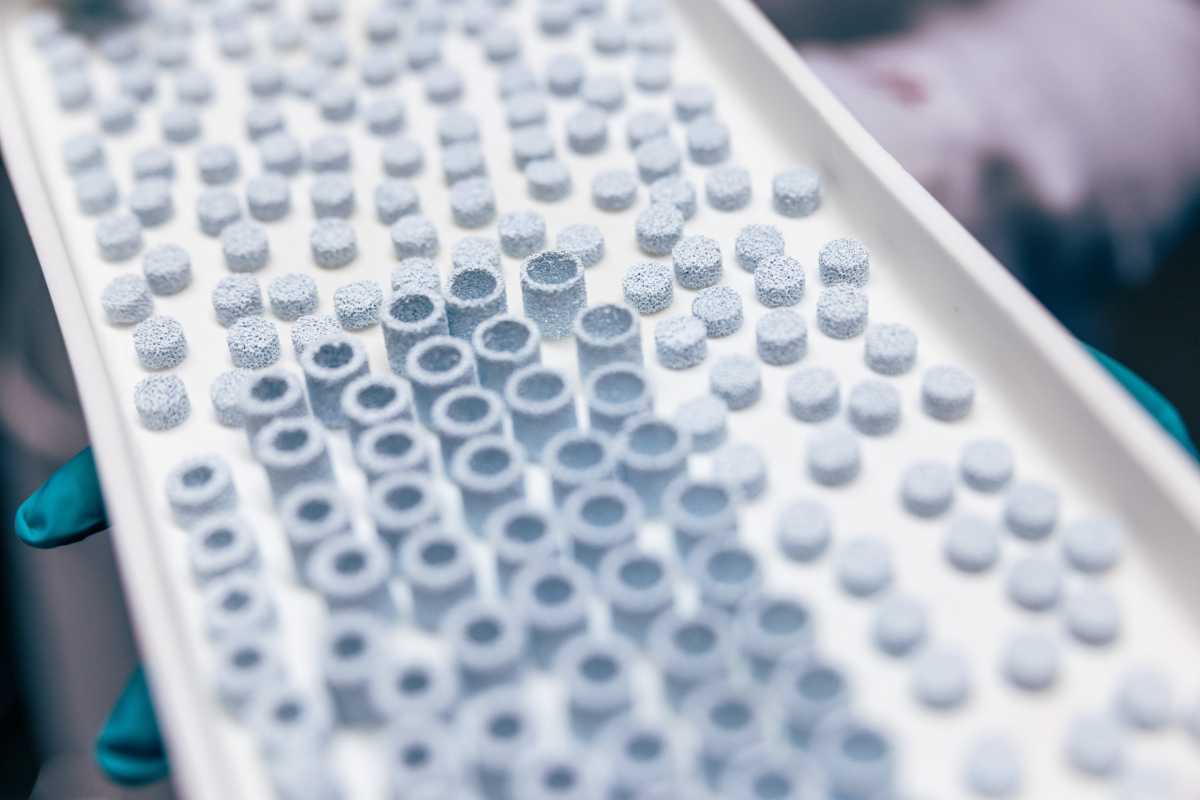
Researchers at Tampere University in Finland have made a significant breakthrough with the development of 3D-printed ceramic implants that closely resemble human bone. This innovative technology has the potential to revolutionize personalized bone regeneration, offering more effective and accessible treatment options for those suffering from bone defects.
The study, published in Materials Today Bio, details how hydroxyapatite, which forms the mineral structure of natural bone, was used to create bone-like scaffolds that support the body's own capacity for tissue regeneration. These implants can be precisely tailored to match a patient’s individual bone defect without relying on drugs or growth factors, reducing potential side effects.
According to Antonia Ressler, Postdoctoral Research Fellow at the Tampere Institute for Advanced Study, "By using the same material that nature uses and shaping it through ceramic 3D printing, the implants can be precisely tailored to match a patient's individual bone defect, without relying on drugs or growth factors that may cause side effects."
The research is part of an ongoing project called GlassBoneS, which aims to further develop this technology for broader clinical applications. Ressler emphasizes, "This technology allows implants to be designed for individual needs - no more 'one-size-fits-all' solutions. We believe these types of implants could be used in routine bone regeneration treatments within the next decade."
The team found that carefully designed internal pores with an optimal porosity and size can significantly enhance the osteogenic potential of the scaffolds. These structures allow bone-forming cells to enter, interact with one another, and successfully begin forming new bone tissue.
Moreover, subtle changes in material chemistry and surface properties were discovered to influence cell behavior. Ressler notes, "We found that high temperatures during processing can alter the surface of the material in ways that make it more difficult for human cells to attach. Our finding highlights that not only the composition but also the surface properties of biomaterials are critical for successful bone regeneration."
This study marks a significant step forward in personalized medicine by providing affordable scaffolds for bone augmentation procedures, which could improve patients' quality of life and provide broader access to these treatments.
As Ressler concludes, "This technology allows implants to be designed for individual needs - no more 'one-size-fits-all' solutions. We believe these types of implants could be used in routine bone regeneration treatments within the next decade."