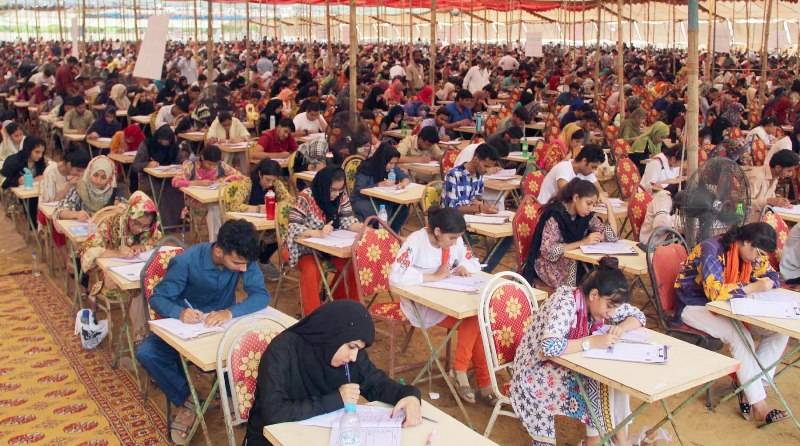
Discover why FPSC's controversial marking criteria may unfairly disadvantage candidates based on their optional subjects in the CSS exam.
The current examination process for the Civil Services of Pakistan (CSS) is under scrutiny due to concerns over its fairness. Khalid Ranjha, a writer interested in current affairs, highlights how some students are being unduly disadvantaged by the marking criteria used by the Federal Public Service Commission (FPSC).
Therapeutic methods involving aversive stimuli like electric shocks and nasty tastes have been employed to help drug-abusers, sex offenders, and pedophiles unlearn undesirable behaviors. However, these techniques face criticism for high dropout rates, aggression, poor compliance with treatment, and potential health risks for individuals with heart or lung conditions.
Psychologists are now using gentler methods instead of the controversial aversive stimuli. Yet, according to discussions within the CSS Club - a social media platform for aspirants - and analysis of past exam results, FPSC's examiners continue to employ questionable practices that unfairly impact students' chances of success in the CSS examination.
A detailed look at the mark sheets from recent years reveals a stark disparity between candidates who choose certain optional subjects and those who select more popular or high-scoring options. For instance, students opting for less favored subjects often receive significantly lower scores compared to their peers who chose higher scoring subjects, even if they performed well in other parts of the exam.
CSS aspirants believe that FPSC deliberately targets these unpopular subjects to ease its own workload and avoid having to evaluate a large number of papers. This perception leads many students into low spirits, feeling that no matter how hard they study, their chances are slim unless their chosen optional subjects happen to be among the highest scoring.
FPSC's examiners need to address these concerns by clarifying their marking criteria and answering questions posed by candidates. For example, can a student who scores poorly in two or three low-scoring optional subjects compete with one who has higher scores in those same subjects? Is it fair that one candidate could receive 70-90 marks less than another due to the latter's chosen optional subjects?
Moreover, even if students manage to score well in their interviews, they might still face significant disadvantages. The system appears to favor candidates whose optional subjects happen to be among the highest scoring, while those with lower-scoring subjects are at a disadvantage regardless of how well they perform in interviews.
Critics argue that FPSC's weak evaluation framework is responsible for maladministration and that the CSS exam results do not reflect true meritocracy. Some top performers have experienced setbacks, such as candidates who topped the 2010 and 2016 exams but failed in subsequent years or a Rhodes Scholar who performed poorly in the CSS essay.
Given these issues, it is crucial for FPSC to reassess its criteria and address the perceived favoritism. Otherwise, any proposed reforms may not yield desired results unless the fundamental flaws in the examination process are addressed.
In conclusion, while Pakistan's education system faces challenges, the current marking practices by FPSC appear to be a major cause of dissatisfaction among candidates. It is time for the commission to take responsibility and ensure that all students are evaluated fairly based on their merits rather than arbitrary subject choices.