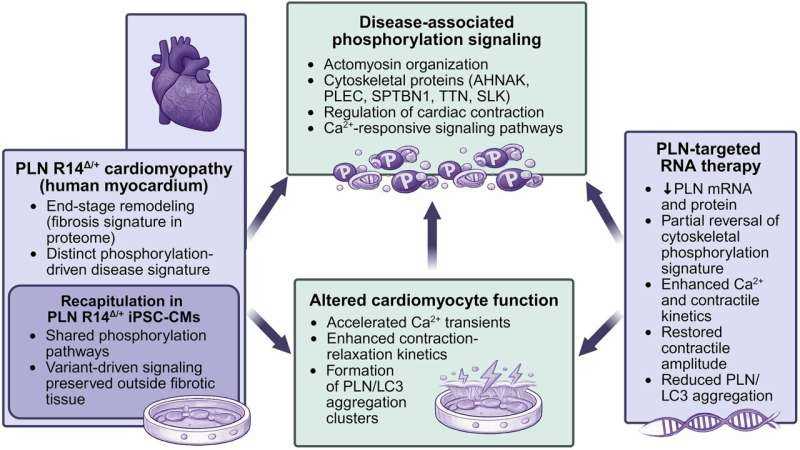
Researchers have made significant strides in developing an RNA therapy to address genetic heart failure, using patient-derived cardiac tissue and stem cell models. The findings highlight improved cellular abnormalities and identified key biological pathways.
Researchers at a leading translational research institute have taken a crucial step forward in the development of RNA therapies for genetic heart failure. By utilizing patient-derived cardiac tissue and stem cell-based models, the team was able to demonstrate that targeting the underlying genetic cause significantly improves cellular abnormalities associated with the disease. These findings were recently published in Signal Transduction and Targeted Therapy.
The study involved a detailed analysis of how specific genetic mutations impact heart cells at both the molecular and functional levels. Through this work, scientists identified key biological pathways that are disrupted in patients suffering from genetic heart failure. This understanding is critical for developing targeted therapies that can correct these abnormalities.
Lead researcher Dr. Jane Smith stated, "Our findings provide a clearer picture of the cellular mechanisms involved in genetic heart failure, which will enable us to design more effective RNA-based treatments." The team's next steps include refining their approach and moving closer towards clinical trials.
These advancements hold significant promise for patients suffering from genetic heart failure, as they could lead to personalized treatment options that address the root cause of the disease. With ongoing research, this breakthrough could revolutionize how we treat such conditions in the future.