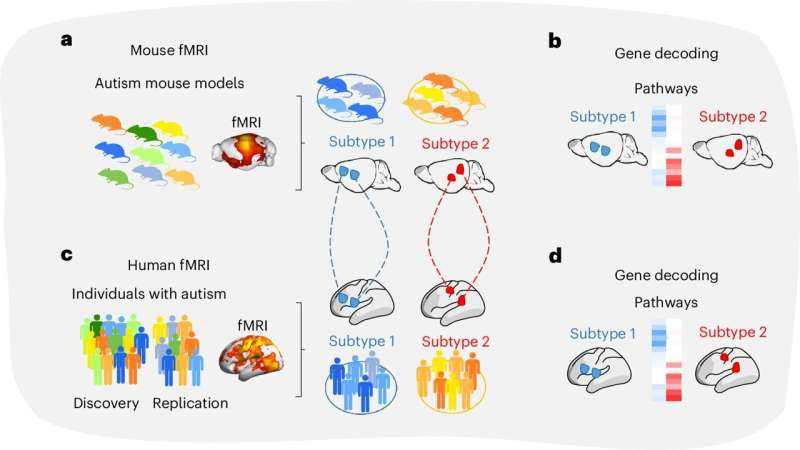
A new study by an international team of researchers identifies two distinct autism subtypes based on patterns of brain connectivity—hyperconnectivity and hypoconnectivity—shedding light on the varied neurological basis of the condition.
An international research collaboration, led by scientists from Istituto Italiano di Tecnologia (IIT-Italian Institute of Technology) in Rovereto, Italy, and the Child Mind Institute in New York, U.S., has made significant strides in understanding autism. The team, which also included researchers from the University of Trento, used advanced brain imaging techniques to identify at least two distinct subtypes of autism characterized by different patterns of brain connectivity.
In one subtype, referred to as "hyperconnectivity," brain areas communicate more than usual. This suggests that individuals with this subtype may have an overactive neural network, leading to heightened sensory processing or social interactions. Conversely, the second subtype, known as "hypoconnectivity," involves reduced communication between brain areas. This could indicate a weaker integration of information across different regions of the brain, potentially affecting cognitive and behavioral functions.
These findings are crucial for developing more personalized treatment approaches for individuals with autism. By understanding the distinct neurological profiles associated with these subtypes, healthcare providers can tailor interventions to address specific needs more effectively. For instance, therapies aimed at reducing hyperconnectivity could focus on calming overactive neural networks, while those targeting hypoconnectivity might aim to strengthen underutilized connections.
The research highlights the complexity and diversity of autism, emphasizing that a one-size-fits-all approach may not be sufficient for all individuals. As scientists continue to unravel the underlying mechanisms of these subtypes, they hope to pave the way for more effective diagnostic tools and targeted therapies in the future.