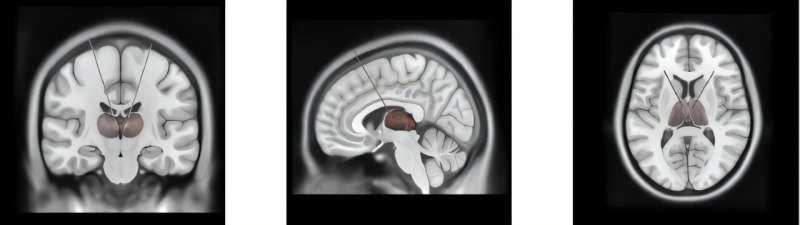
Researchers from LMU uncover a midbrain rhythm that may indicate distinct conscious states, offering new insights into dreaming and deep sleep.
Neuropsychologists at Ludwig Maximilian University (LMU) have made a significant breakthrough in understanding the mechanisms of consciousness. Their latest research has identified a unique brain rhythm in the midbrain region that could serve as a biophysiological signature for different states of consciousness, including dreams and deep sleep.
This discovery is crucial because it provides scientists with a potential marker to distinguish between various levels of awareness during sleep and wakefulness. The researchers observed this rhythm using advanced neuroimaging techniques, which allowed them to monitor electrical activity in the brain more precisely than ever before.
The identified rhythm appears to be particularly active during specific phases of sleep, such as rapid eye movement (REM) sleep, when dreaming is most prevalent. This finding could have far-reaching implications for understanding the nature of dreams and the transition between different states of consciousness.
By pinpointing this midbrain rhythm, scientists may gain deeper insights into the neural processes underlying various cognitive functions during sleep. This knowledge could lead to advancements in treating conditions related to altered states of consciousness, such as insomnia or narcolepsy. Additionally, it opens up new avenues for research in sleep disorders and the impact of sleep on overall mental health.
The discovery also raises intriguing questions about the nature of consciousness itself. As researchers continue to explore this rhythm further, they may uncover more about how our brains generate and maintain conscious experiences during both wakefulness and sleep.