Researchers from University of Galway and KU Leuven have developed an advanced AI model that explains how physical forces slow cancer growth, potentially revolutionizing treatment methods.
Researchers from the University of Galway, in collaboration with CÚRAM—the Taighde Éireann-Research Ireland Centre for Medical Devices—and KU Leuven in Belgium, have made significant strides in understanding a long-standing mystery: why squeezing tumors slows their growth. Using an innovative AI-accelerated computational model, these multidisciplinary scientists have uncovered the underlying mechanisms that could lead to new and more effective cancer treatments.
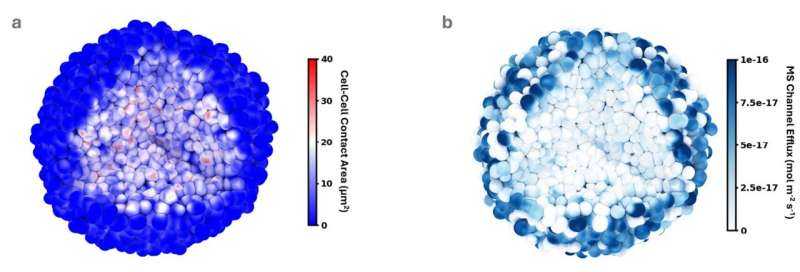
The study, which combined expertise from various fields including biology, physics, and computer science, aimed to test the theory that physical forces play a crucial role in regulating tumor growth. By creating an advanced AI-driven computational model, the team was able to simulate the interactions between cells and their environment, providing insights into how mechanical stress affects cancer progression.
According to Dr. Fiona McManus from the University of Galway, "Our findings suggest that physical pressure on tumors can trigger cellular responses that inhibit growth. This opens up new avenues for developing therapies that mimic these natural mechanisms." The research not only provides a deeper understanding of tumor biology but also paves the way for targeted interventions that could be more effective than current treatments.
The implications of this breakthrough are far-reaching. By harnessing the power of AI, scientists can now explore how different types of physical forces affect cancer cells in various ways. This knowledge could lead to the development of novel therapeutic strategies that mimic natural biological processes, potentially offering more precise and less invasive treatment options for patients.
In conclusion, the innovative work by this international team of researchers highlights the potential of interdisciplinary collaboration and advanced computational tools in advancing our understanding of complex diseases like cancer. As further research continues, these findings could transform how we approach cancer treatment, ultimately improving patient outcomes and quality of life.