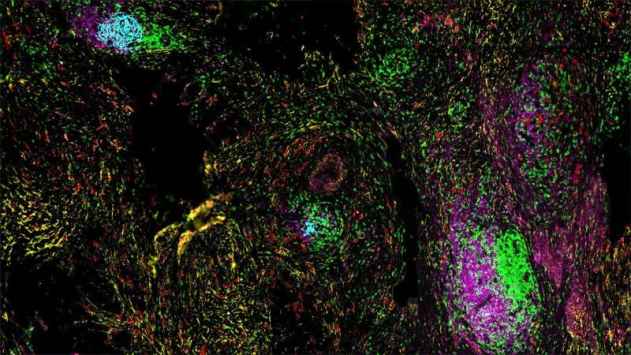
The development of a spatial atlas of tertiary lymphoid structures, or TLSs, has provided new insights into the role of these specialized immune structures in cancer. Researchers from The University of Texas MD Anderson Cancer Center have created this comprehensive atlas, which has been published in a recent study. The atlas is the first of its kind and offers a detailed look at TLSs across multiple types of cancer.
The study utilized artificial intelligence-powered technology to analyze and map the TLSs within tumors. This innovative approach enabled the researchers to gather a vast amount of data on the maturation state, spatial location, and composition of TLSs. By examining these factors, the researchers were able to identify patterns and correlations that may have significant implications for cancer prognosis and treatment response.
One of the key findings of the study is that the maturation state of TLSs within tumors can provide important information about cancer prognosis. The researchers discovered that TLSs that are more mature and have a specific composition may be associated with a better prognosis for patients. Additionally, the spatial location of TLSs within tumors was also found to be a significant factor, with certain locations being more favorable than others.
The study's findings also have implications for cancer treatment response. The researchers found that the presence and characteristics of TLSs within tumors may be used as biomarkers to predict how well patients will respond to certain treatments. This information could be used to develop more personalized treatment plans, tailored to the specific needs and characteristics of each patient.
The development of this spatial atlas of TLSs is a significant step forward in the field of cancer research. By providing a detailed understanding of these specialized immune structures, the atlas has the potential to improve patient outcomes and inform the development of new and more effective cancer treatments. As researchers continue to study and analyze the data from this atlas, they may uncover even more insights into the complex relationships between TLSs, cancer, and the immune system.