Donald Trump seeks to expand Abraham Accords to include more Muslim countries as part of a potential Iran deal, citing recent talks with Saudi Arabia, Qatar, and other nations in the region.
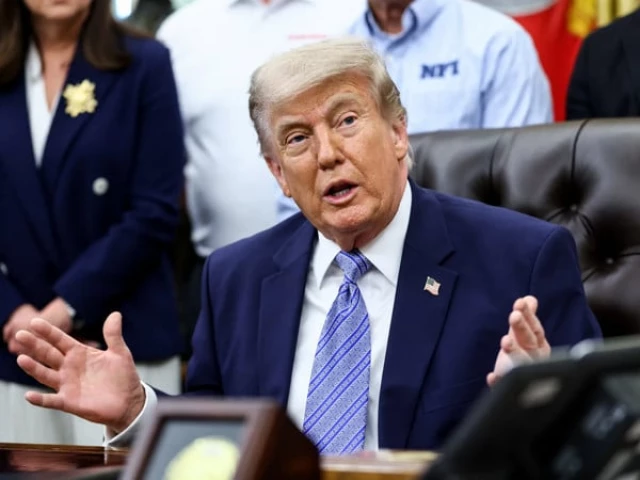
US President Donald Trump has recast his bid for peace with Iran as an attempt to strike a grand bargain across the Middle East, urging Muslim countries in the region and beyond to settle their disputes with Israel by joining the Abraham Accords. In a recent post, Trump listed countries whose leaders he had spoken to on a conference call about efforts to end the war, including Saudi Arabia, Qatar, Pakistan, Turkey, Egypt, and Jordan, as well as the United Arab Emirates and Bahrain, which have already signed the accords.
Trump emphasized the importance of all these countries signing onto the Abraham Accords, stating that it should be mandatory for them to do so, especially if Iran signs an agreement with the United States. He he is mandatorily requesting that all countries immediately sign the Abraham Accords, and that if Iran signs its agreement, it would be an honor to have them also be part of this unparalleled world coalition. The Abraham Accords, a set of agreements brokered under Trump in 2020, govern the normalization of diplomatic relations between Israel and countries that have not recognized it.
However, the accords remain unpopular among public opinion in the region as they do not address the Palestinian issue. Trump most countries he spoke to should be ready, willing, and able to make this settlement with Iran a far more historic event than it would otherwise be. He emphasized that it should start with the immediate signing by Saudi Arabia and Qatar, and everybody else should follow suit. Trump also implied that Israel's bitter enemy, Iran, should sign on to the accords, stating that negotiations with Iran were proceeding nicely, but gave no indication that a deal was imminent.
Meanwhile, Iran's top negotiator and its foreign minister were in Doha for talks with Qatar's prime minister on a potential deal with the United States to end the three-month-old war. The discussions focused primarily on the Strait of Hormuz and Iran's stockpile of highly enriched uranium, while Iran's central bank governor attended to discuss the potential release of frozen Iranian funds as part of a final deal. Iran's foreign ministry spokesperson Esmaeil Baghaei said earlier that nuclear issues would only be negotiated if the framework accord is agreed first. Separately, Iranian President Masoud Pezeshkian ordered the restoration of international internet access in Iran, which had been suspended since the United States and Israel launched attacks against the country.
The developments come as the region awaits a potential breakthrough in the talks between the United States and Iran. While Trump's efforts to expand the Abraham Accords may face significant challenges, his initiative has sparked renewed interest in the possibility of a broader Middle East peace agreement. As the negotiations continue, it remains to be seen whether the parties involved can reach a mutually acceptable deal that addresses the complex issues at play. The outcome of these talks will have significant implications for the region and the world, and will be closely watched by leaders and citizens alike.