President Trump's push for Middle Eastern countries to join the Abraham Accords as part of a broader deal with Iran sparks controversy and skepticism.
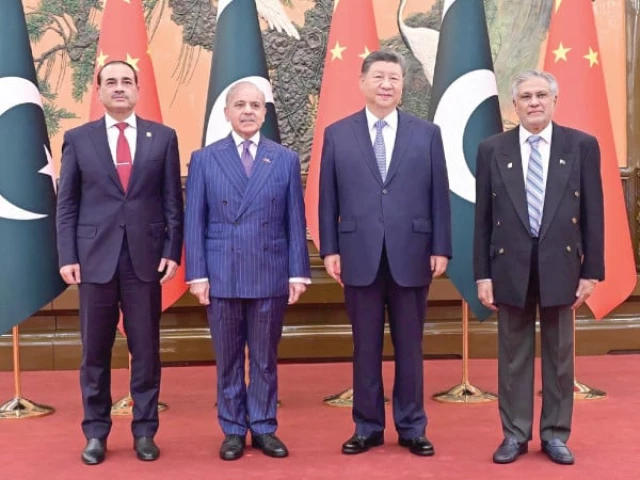
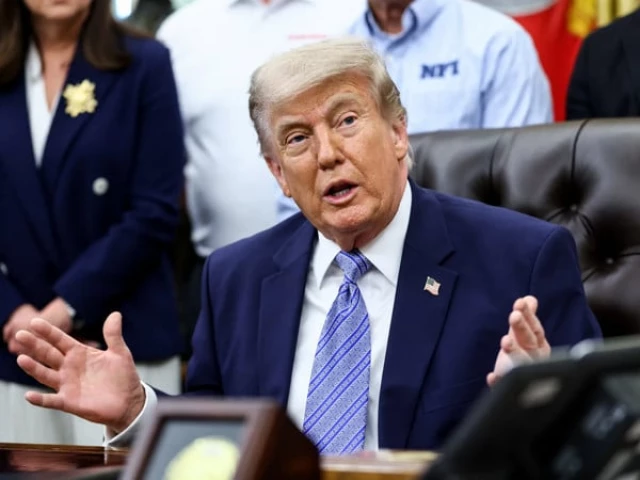
At a time when negotiators are striving to secure a peace agreement between the United States and Iran, President Donald Trump has stirred fresh controversy by attempting to link any prospective deal to Middle Eastern countries joining the Abraham Accords. In a post on Truth Social, Trump acknowledged that negotiations with Iran were "proceeding nicely," but claimed during his conference call with leaders from Saudi Arabia, United Arab Emirates, Qatar, Pakistan, Türkiye, Egypt, Jordan, and Bahrain, he pushed for all of them to join the Abraham Accords simultaneously as part of a broader regional settlement linked to Iran.
According to Barak Ravid, an Axio correspondent and analyst, the leaders were surprised by Trump's request. "The leaders, especially those of Saudi Arabia, Qatar, and Pakistan who don't have formal diplomatic relations with Israel, were taken aback," Ravid quoted a US official as saying. "There was silence on the line and Trump joked and asked if they are still there."
Trump specifically urged Saudi Arabia and Qatar to sign first and suggested that countries refusing to join should not be included in any broader deal with Iran. However, Riyadh is unlikely to entertain such a request. Al Arabiya English reported quoting a Saudi source: "Saudi Arabia's position on the Palestinian issue remains unchanged. There needs to be an irreversible pathway to a Palestinian state."
Separately, researcher Hassan Al-Mustafa said Saudi Arabia's policy has been clear for decades, and it presented the Arab Peace Initiative based on the establishment of a Palestinian state with its capital in East Jerusalem. Riyadh last made its position clear during Crown Prince Mohammad bin Salman's visit to Washington last November.
In his Truth Social post, Trump also claimed that some regional leaders would even welcome Iran into the Abraham Accords framework if a US-Iran agreement is finalised, describing the proposed arrangement as a historic coalition capable of reshaping the Middle East politically, economically, and strategically. This effort appears to signal an attempt by Trump to transform recent ceasefire diplomacy into a broader geopolitical restructuring project centered on the Abraham Accords.
Trump's public reference to Pakistan in the context of normalisation discussions seems aimed at projecting the image of a widening Islamic-world consensus behind an American-sponsored regional order in the Middle East. However, Asma Shirazi, a journalist and columnist, "Pakistan's position on Israel and the Palestinian issue remains longstanding, principled, and constitutionally rooted."
Michael Kugelman, Senior Fellow for South Asia at the Atlantic Council, in the past Pakistani officials had informal contacts with Tel Aviv but have always linked recognition of Israel to the establishment of a Palestinian state. "So for now, joining the Abraham Accords is a nonstarter for Pakistan," he wrote.
Experts argue that the urgent objective of preventing military escalation in the Middle East cannot automatically be expanded into a broader political alignment exercise involving normalisation with Israel. Trump's framing of the issue in "all or no deal" terms is being interpreted as a pressure tactic intended to push regional states toward wider political alignment or serve domestic political messaging within the United States.
From Pakistan's perspective, analysts argue that the resolution of military tensions with Iran and questions related to Arab-Israeli normalisation are separate diplomatic tracks that cannot be artificially merged. Trump's own acknowledgment that "one or two" countries may choose not to join such arrangements is being interpreted as an implicit recognition of the political and ideological realities within parts of the Muslim world.
More importantly, Trump's request seeks to sideline the core cause of conflict in the Middle East: establishing a Palestine state with Jerusalem as its capital. Analysts say that Islamabad appears determined to preserve its traditional foreign policy position: supporting regional peace and de-escalation while maintaining that any change in its stance toward Israel must remain tied to a just and internationally recognised settlement of the Palestinian issue.