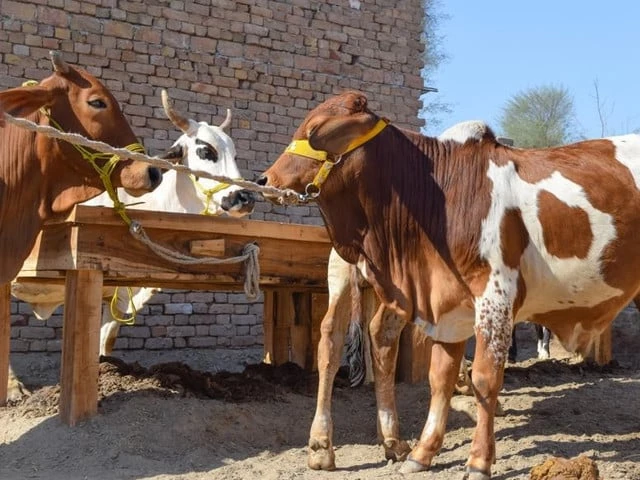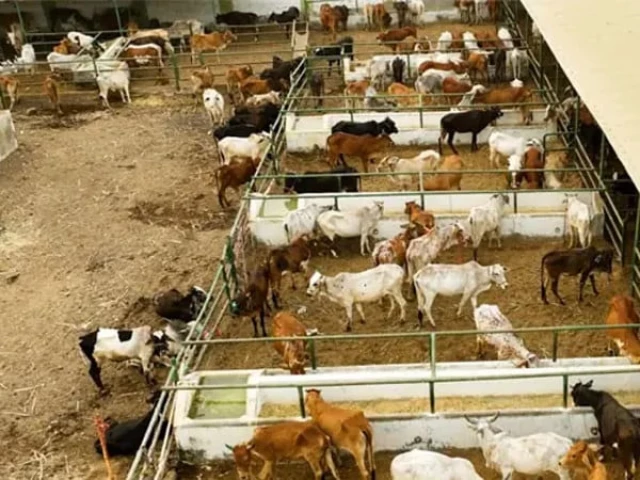
The Rawalpindi Cantonment Board has sparked controversy by introducing a two percent tax on buyers of sacrificial animals at the Bhatta Ground cattle market, leading to protests and clashes with contractor staff, amid claims that the levy is unprecedented and being collected forcibly.
The Rawalpindi Cantonment Board's decision to impose an additional two percent tax on buyers purchasing sacrificial animals from the Bhatta Ground cattle market for Eidul Azha has triggered widespread outrage and protests among citizens. The move has led to clashes between buyers and contractor staff, with many terming the levy unprecedented and claiming that it is being collected forcibly.
According to details, the cantonment board awarded the Bhatta Ground cattle market contract to a large consortium operating under Haji Ismail & Co for a staggering Rs3.05 billion, with the agreement including a three-year extension clause and a 10 percent annual increase. The contract also allows for weekly cattle markets to be held every Tuesday and Wednesday. However, the inclusion of a clause imposing a two percent "sale fee" on buyers purchasing animals for religious sacrifice has sparked controversy, with many claiming that no such tax exists in other cattle markets across Rawalpindi, Islamabad, or Punjab.
The tax is allegedly being collected forcibly by contractor staff, who congratulate buyers on their purchase and then inform them that two percent of the amount must be paid as tax before the animal can be taken out of the market. This has led to arguments and physical altercations, with one buyer, Rashid, a resident of Rawalpindi's Gawalmandi area, claiming that he was asked to pay Rs6,000 as tax. The situation has become increasingly tense, with witnesses reporting that arguments often escalate into scuffles and physical altercations.
The cantonment board has confirmed that the two percent sale tax is indeed part of the agreement, with Assistant Engineer Naveed Hussain stating that Clause 9 of the contract makes buyers liable to pay the tax and authorizes the contractor to collect it. However, the board's decision has been widely criticized, with many calling for the tax to be withdrawn and the contract to be revised. As the situation continues to unfold, it remains to be seen how the cantonment board will respond to the growing outcry and whether the tax will be repealed or revised.
The controversy surrounding the tax has also raised questions about the transparency and accountability of the cantonment board's decision-making process, with many calling for greater clarity and consultation with stakeholders before such decisions are made. As the Eidul Azha celebrations approach, the issue is likely to remain a contentious one, with buyers and sellers alike waiting with bated breath to see how the situation will be resolved.