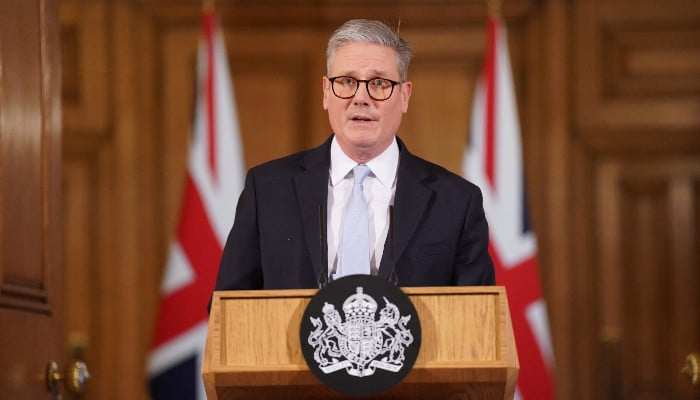
Prime Minister Keir Starmer of the UK defied calls to resign, stating he would "get on with governing" despite growing pressure from his party.
Prime Minister Keir Starmer of the United Kingdom defied calls to resign on Tuesday, insisting that he would continue as leader and focus on governing. The move came in response to a series of resignations among junior ministers and lawmakers who have called for him to set a timetable for his departure following Labour's disappointing election performance.
At a cabinet meeting, Starmer emphasized the need to maintain stability amid growing calls for change. "The past 48 hours have been destabilizing for government and that has a real economic cost for our country and for families," he told ministers according to his office. "The country expects us to get on with governing. That is what I am doing and what we must do as a Cabinet."
Starmer's stance was in stark contrast to the sentiments expressed by many within his own party, who have been urging him to resign following Labour's narrow defeat at the polls. On Tuesday, a junior minister resigned after a handful of ministerial aides also left the government. More than 80 Labour lawmakers have publicly called for Starmer to set a resignation date so that the party could install a new leader in an orderly manner.
In his Monday press conference, Starmer attempted to shore up his position by promising to act more boldly and with greater urgency on key issues facing Britain. He emphasized that the country would never forgive Labour if it embarked on a leadership challenge just two years after its historic parliamentary majority was supposed to bring stability to the nation following Brexit.
Despite these efforts, Starmer's defiance has not quelled the calls for his resignation. The economic impact of the political instability remains concerning, with British government bonds rallying weakly in response to his comments but remaining in the red throughout the day.