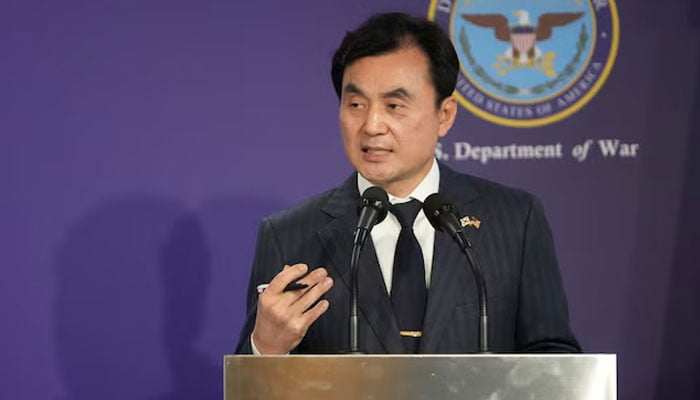
South Korean Defense Minister Ahn Gyu-Back discusses reviewing a phased contribution to Strait of Hormuz security efforts, avoiding military participation.
South Korean Defense Minister Ahn Gyu-back has announced that the country is considering a phased approach to supporting efforts aimed at ensuring safe navigation through the Strait of Hormuz. This decision comes in response to a meeting with U.S. Defense Secretary Pete Hegseth during which Seoul expressed its commitment as a responsible member of the international community, but also highlighted that detailed discussions on expanding military involvement have not yet taken place.
Ahn emphasized that possible forms of phased support could include expressions of political support, personnel dispatches, information-sharing, and the provision of military assets. He stressed that no specific plans for increased troop involvement have been discussed at this stage. "We said at about this level that fundamentally we will participate as a responsible member of the international community and that we will review ways to contribute in a phased manner," Ahn stated.
The minister clarified that there was no deep discussion on expanding South Korean military participation, noting that any decisions would need to comply with domestic legal procedures. He also mentioned that the meeting came shortly after Seoul condemned an attack on a South Korean-flagged vessel near the Strait of Hormuz last week, expressing strong condemnation but still investigating responsibility for the incident.
In his remarks, U.S. Defense Secretary Hegseth emphasized the importance of allies standing together in response to rising global threats and praised South Korea's commitment to increasing its defense spending and assuming greater security responsibilities on the Korean Peninsula. He also expressed understanding over Seoul's position regarding a conditions-based transfer of wartime operational control (OPCON) from the United States, indicating that both sides exchanged views on this issue.
Ahn further noted discussions about plans for building nuclear-powered submarines and confirmed that no decisions were made during the meeting concerning reductions in U.S. forces stationed in South Korea or changes to the strategic flexibility of US troops based there.