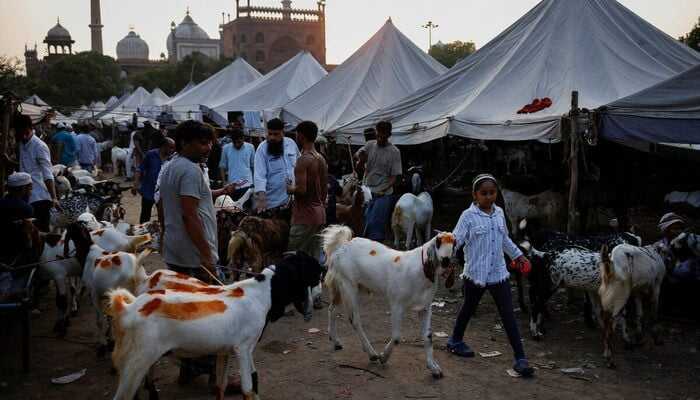
The Indian government has imposed significant restrictions on Eid ul Adha practices, particularly with regards to animal sacrifice. In a move aimed at maintaining public order and safety, authorities have banned the sacrifice of cows and calves during the festival. This decision is expected to impact the traditional practices of Muslims in India, who typically mark the occasion by sacrificing animals as a symbol of devotion and gratitude.
The restrictions have been imposed by the authorities in the states of Uttar Pradesh and Delhi, where large Muslim populations reside. The decision to ban cow and calf sacrifice is likely to be controversial, as it touches on sensitive religious and cultural issues. However, the government has cited concerns about public safety and the potential for disruptions to law and order as the primary reasons for the ban. Additionally, road blockades, which are often associated with Eid ul Adha celebrations, have also been prohibited.
As Muslims in India prepare to celebrate Eid ul Adha, many are likely to be affected by the new restrictions. The festival, which is also known as the Feast of Sacrifice, is an important occasion in the Islamic calendar, and animal sacrifice is a significant part of the traditional practices. However, the Indian government's decision to impose restrictions on these practices has sparked debate and discussion among Muslim communities. While some have expressed understanding for the government's concerns about public safety, others have criticized the move as an infringement on their religious freedoms.
The restrictions on Eid ul Adha practices in India are not unprecedented. In recent years, there have been instances of tensions and conflicts between different communities during the festival, particularly with regards to animal sacrifice. The Indian government has been keen to maintain public order and safety, and the latest restrictions are seen as an attempt to prevent any potential disruptions. As the festival approaches, it remains to be seen how the Muslim community in India will respond to the new restrictions and how the celebrations will unfold.
In the midst of these developments, Muslims in India are preparing to celebrate Eid ul Adha with traditional fervor and enthusiasm. Despite the restrictions, many are expected to mark the occasion with prayers, feasts, and other festivities. The festival is an important occasion for family gatherings, charity, and community bonding, and its significance extends beyond the traditional practices of animal sacrifice. As the Indian government continues to navigate the complex issues surrounding Eid ul Adha celebrations, it is likely that the festival will remain an important and contested aspect of the country's cultural and religious landscape.