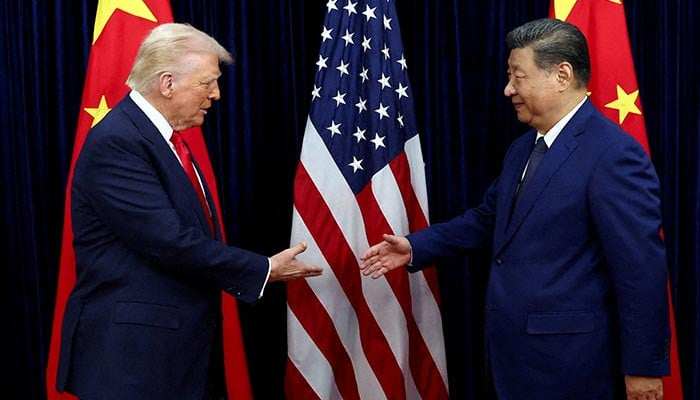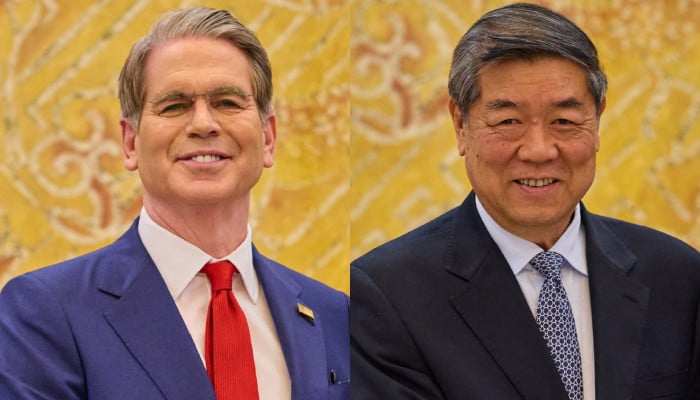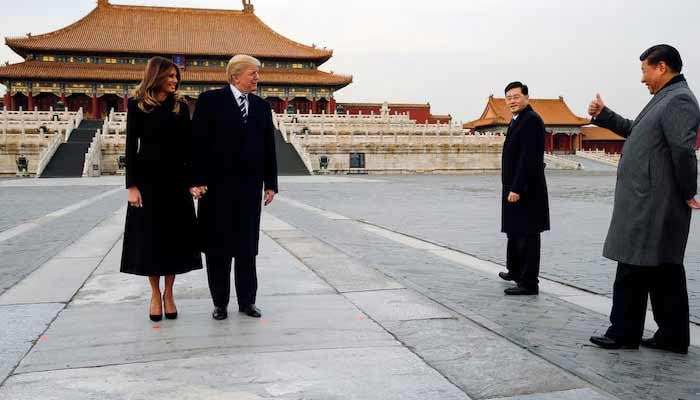
US President Trump and Chinese President Xi Jinping visit the Temple of Heaven in Beijing seeking agricultural deals during their summit. The setting carries both historical and practical significance.
US President Donald Trump and his wife Melania are set to visit the Forbidden City with Chinese President Xi Jinping in Beijing, China, on November 8, 2017. This historic encounter takes place within the sacred grounds of Beijing's Temple of Heaven, a site where emperors once prayed for bumper crops under the blue-tiled, triple-eaved roof of the Hall of Prayer for Good Harvests.
For Chinese President Xi Jinping, hosting Trump there offers a rich stage to showcase China’s enduring history and sophisticated civilisation. The setting carries more literal resonance for US President Trump: agriculture will be high on his agenda as he seeks bigger purchases from China in soybeans, other crops, and meat.
According to the White House, both leaders are scheduled to visit the Temple of Heaven on Thursday during their summit. Analysts predict that Trump's ambitions have been blunted by court rulings on tariffs, narrowing his goals to a few deals on beans, beef, and Boeing jets. Additionally, he is seeking China’s help to resolve his unpopular Iran war.
Historian Lars Ulrik Thom notes that for Xi, who enters the talks projecting more confidence than Trump, there could be an opportunity to pull out all the stops for the mercurial US leader known for his love of pomp and pageantry. Located some 7km (4.35 miles) south of the Forbidden City, the Temple of Heaven is a popular tourist site today, surrounded by ancient pine and cypress trees where Beijingers practice tai chi, play chess, or dance.
During the dynastic rule, emperors would process from the Forbidden City to the Temple of Heaven once a year with an entourage of thousands of men and elephant carriages. This religious ceremony affirmed their right to rule. Poor harvests, famine, or disorder could reflect poorly on an emperor's standing. The Hall of Prayer for Good Harvests, rebuilt in the late 1800s with tall redwood imported from the US, is the Temple’s best-known landmark.
For US farmers, who are among Trump's biggest electorate ahead of November's midterm elections, this visit carries significant practical implications. China is the top market for US farmers, taking about $24 billion worth of their goods in 2019 before Trump took office. However, Beijing has frozen much of this trade and scaled back its need for US supplies, using it as a powerful lever against Trump's tariffs.
Soybean farmers will be watching how China fulfils last year’s commitment to buy 25 million metric tons of soybeans annually until 2028. Bigger Chinese purchases could appease distressed US farmers ahead of the midterm elections. For Xi, the venue offers more than just imperial scenery; it is a powerful backdrop to tell Donald Trump and the world that China has been here for thousands of years.
As both leaders prepare for their summit, agriculture remains a critical area of focus, with potential deals on soybeans, grains, and meat at stake. The Temple of Heaven serves as a poignant reminder of historical ties while also addressing contemporary economic challenges.