Pakistan remains engaged with international partners to promote regional stability and ease tensions between the US and Iran through diplomatic efforts.
Pakistan has reaffirmed its commitment to playing a role in reducing tensions between the United States and Iran, emphasizing its continued diplomatic efforts to promote regional stability. The country's engagement with international partners is aimed at fostering peace, stability, and prosperity in the region. This approach is in line with Pakistan's belief in negotiations and diplomacy as the most effective means of resolving conflicts.
The Foreign Office spokesperson, Tahir Andrabi, highlighted Pakistan's active involvement in the US-Iran peace process during a weekly briefing. He mentioned that Prime Minister Shehbaz Sharif had held telephone conversations with the leaders of Qatar and Azerbaijan, while Deputy Prime Minister and Foreign Minister Ishaq Dar remained in contact with foreign ministers from several countries, including Saudi Arabia, Iran, China, Austria, and Singapore. The spokesperson also Chinese Foreign Minister Wang Yi had expressed full support for Pakistan's diplomatic role, emphasizing the importance of a sustainable ceasefire and dialogue.
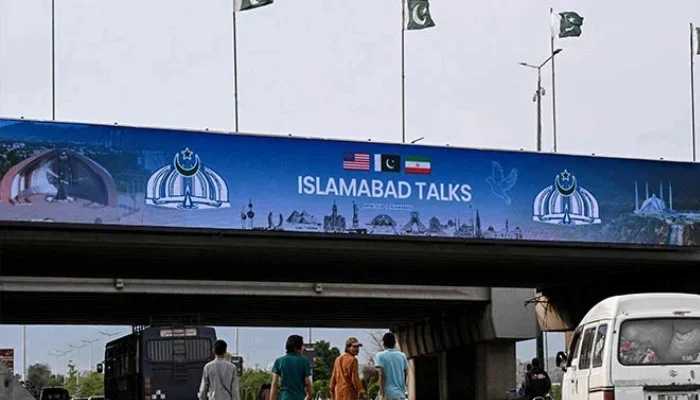
Pakistan has been playing a key mediatory role between Tehran and Washington since the outbreak of hostilities in the Middle East. The conflict erupted after the US and Israel launched coordinated strikes on Iran, prompting retaliatory attacks by Tehran on Israel and US military bases across the region. Pakistan helped broker a two-week ceasefire and later hosted delegations from both sides for peace talks. Although the negotiations ended without a permanent agreement to end the war, Pakistan has continued to mediate between the US and Iran. The Foreign Office spokesperson Islamabad recently forwarded Tehran's response to Washington's proposal for a lasting peace, indicating that the US-Iran peace process is underway.
The spokesperson also addressed reports about an Iranian aircraft in Pakistan, rejecting them as "misleading and sensationalized." He clarified that the Iranian aircraft had arrived in Islamabad during the ceasefire period for matters related to diplomatic personnel and administrative affairs. Additionally, Andrabi discussed Pakistan's ties with Gulf countries, stating that the country's defense relations with brotherly countries are based on institutional frameworks and long-term policy considerations. He emphasized that these relations would not be affected by any single visit or regional development. The spokesperson also commented on reports of deportations from the United Arab Emirates, terming the figures exaggerated and highlighting the need to consider the overall number of Pakistanis residing in the UAE when assessing the situation.
In conclusion, Pakistan's diplomatic efforts to reduce tensions between the US and Iran demonstrate its commitment to promoting regional stability and peace. The country's engagement with international partners and its mediatory role in the US-Iran peace process underscore its resolve to play a constructive role in resolving conflicts and promoting prosperity in the region. As the situation continues to evolve, Pakistan's diplomatic efforts will likely remain crucial in shaping the trajectory of the US-Iran relationship and the broader regional dynamics.