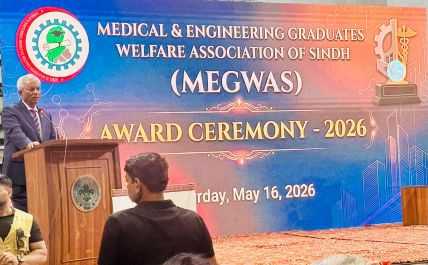
The Sindh Governor, Syed Muhammad Nehal Hashmi, has emphasized the crucial role that doctors and engineers play in the development and progress of a nation. According to him, these professionals are the valuable assets of any country, contributing significantly to its growth and prosperity.
Governor Hashmi's statement underscores the importance of these two professions in driving innovation, improving healthcare, and building infrastructure. Doctors, with their expertise in medicine, are essential for ensuring the well-being of citizens, while engineers, with their technical skills, are vital for designing and developing solutions to complex problems.
The governor's remarks also highlight the need for a nation to invest in the education and training of its doctors and engineers. By doing so, a country can develop a skilled workforce that is capable of addressing its unique challenges and capitalizing on emerging opportunities. This, in turn, can lead to significant economic and social benefits, including improved healthcare outcomes, increased productivity, and enhanced competitiveness.
In addition to their technical expertise, doctors and engineers also bring a unique perspective to the table, one that is grounded in science, evidence, and problem-solving. This perspective is essential for informing policy decisions, driving innovation, and addressing the complex challenges that nations face in the 21st century. As such, it is essential for governments, educational institutions, and industries to work together to support the development of these professionals and to create an environment that fosters their growth and success.
Ultimately, the value of doctors and engineers to a nation cannot be overstated. They are the backbone of a country's healthcare system and its engineering sector, and their contributions have a direct impact on the quality of life of citizens. As Governor Hashmi's statement suggests, it is essential for nations to recognize the importance of these professionals and to take steps to support their development, retention, and growth. By doing so, a country can build a strong foundation for its future prosperity and ensure that it remains competitive in an increasingly complex and interconnected world.