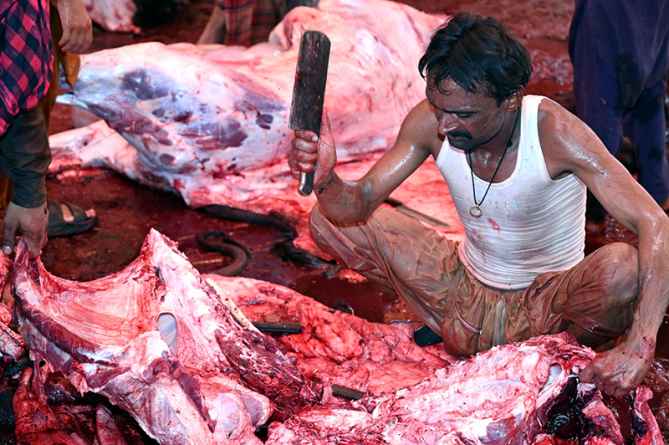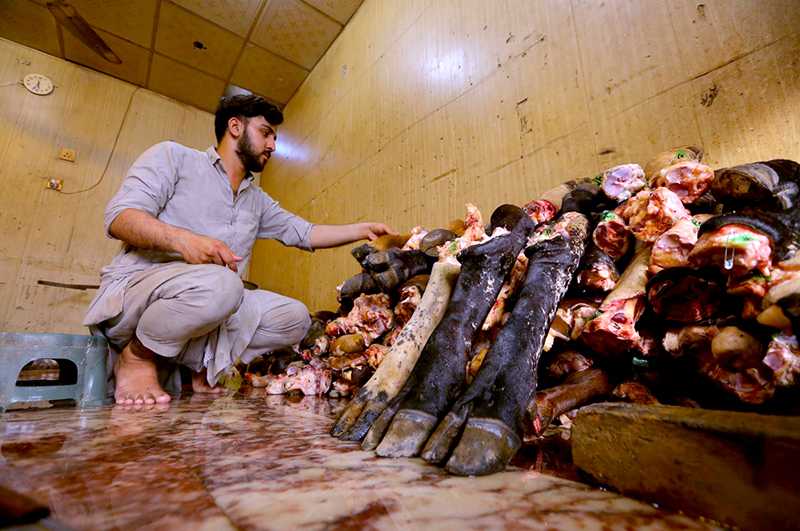
In Islamabad, butchers prepare sacrificial animal legs (Paye) for Eid al-Azha, marking the second day of the festival.
Butchers in Islamabad are busy preparing sacrificial animal legs (Paye) as the second day of Eid al-Azha unfolds. The streets of Warsak road are bustling with activity, as families and individuals make their way to local butchers to purchase these essential components for their festive meals.
The preparation of Paye is a significant part of Eid al-Azha celebrations in Pakistan. These legs are typically from sheep or goats and hold great cultural and religious significance. As the sun rises on this day, skilled butchers work diligently to ensure that each leg is cut with precision and care, ready for the evening's festivities.
Local residents have been seen queuing up early at various butcher shops along Warsak road, eager to secure their Paye before the market runs out. The atmosphere is a blend of excitement and solemnity, as families prepare to honor the traditions that have been passed down through generations.
Eid al-Azha commemorates the willingness of Prophet Abraham to sacrifice his son in obedience to God's command. For Muslims around the world, this festival also involves the symbolic act of sacrificing an animal and distributing its meat among family, friends, and the less fortunate. As the preparations continue on Warsak road, the community comes together in unity and faith, ensuring that the spirit of sacrifice is upheld.
The second day of Eid al-Azha sees a surge in activity as people complete their rituals and prepare for communal prayers later in the evening. The Paye, once prepared, will be an integral part of the grand feasts that follow, bringing families closer together and strengthening community bonds through shared traditions.