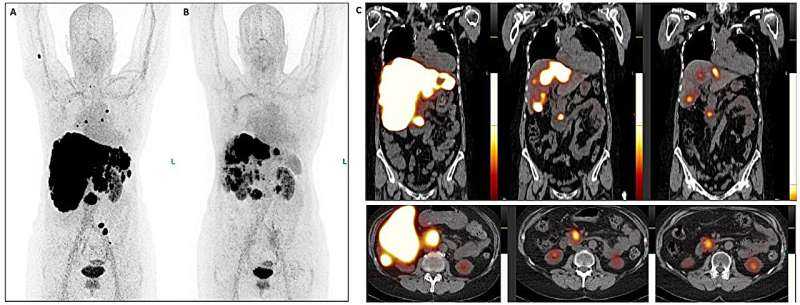
A groundbreaking new treatment for aggressive neuroendocrine tumors has been unveiled, offering hope to patients who have exhausted conventional treatment options. This innovative approach, known as peptide receptor radionuclide therapy, or PRRT, has been found to be safe and effective in treating metastatic neuroendocrine tumor patients. The promising results of this novel therapy were recently presented at the Society of Nuclear Medicine 2026 Annual Meeting, highlighting its potential as a powerful treatment option for this debilitating disease.
The study's findings are particularly significant, as they demonstrate the ability of PRRT to induce partial remission in the majority of patients with advanced cases of neuroendocrine tumors. This is a notable achievement, given the limited treatment options available to patients with this type of cancer. By targeting specific receptors on the surface of cancer cells, PRRT is able to deliver a high dose of radiation directly to the tumor site, minimizing damage to surrounding healthy tissue.
The presentation of this research at the Society of Nuclear Medicine 2026 Annual Meeting marks an important milestone in the development of PRRT as a treatment for neuroendocrine tumors. As the medical community continues to explore new and innovative approaches to cancer treatment, the emergence of PRRT as a viable option is a welcome development. With its potential to improve patient outcomes and enhance quality of life, this novel therapy is likely to generate significant interest and enthusiasm among oncologists and researchers alike.
As researchers continue to refine and improve PRRT, it is likely that this treatment will become an increasingly important component of cancer care. The fact that PRRT has been shown to be safe and effective in patients with advanced neuroendocrine tumors is a testament to the power of innovative medical research and the dedication of the scientific community to finding new and better ways to combat this devastating disease. With further study and development, PRRT may ultimately become a game-changer in the treatment of neuroendocrine tumors, offering new hope to patients and their families.