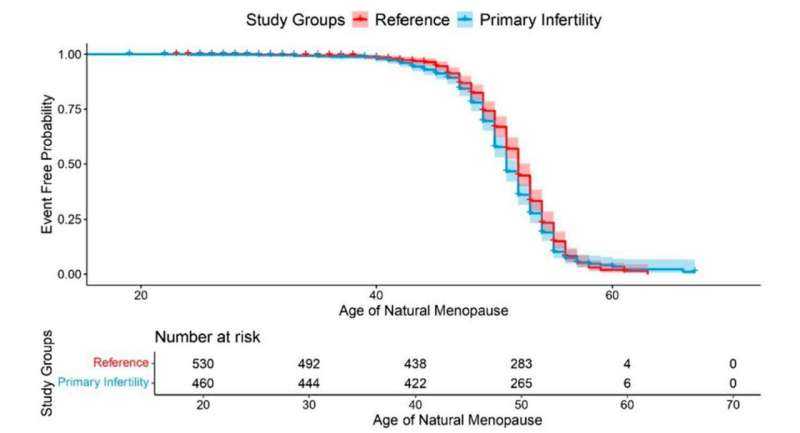
A recent study reveals that women struggling with infertility have a higher risk of experiencing menopause earlier than 45 years old, highlighting the connection between reproductive health and aging.
A new study published in Menopause has uncovered an intriguing link between early onset of menopause and female infertility. The research suggests that women who face challenges in conceiving may be more likely to enter menopause before the age of 45, a condition known as early menopause or premature ovarian failure (POF).
The findings indicate that infertility could serve as a warning sign for potential reproductive health issues, including an earlier-than-expected cessation of menstrual cycles. This connection is significant given that the average woman spends more than one-third of her life in menopause, which typically begins around age 51.
Experts believe that understanding this correlation can help healthcare providers identify women at higher risk and provide them with appropriate support and interventions. The study's authors recommend further research to explore the underlying mechanisms linking infertility and early menopause, potentially leading to new diagnostic tools and treatments for women facing these challenges.
This discovery underscores the importance of comprehensive reproductive health care, emphasizing that issues related to fertility may have broader implications for a woman’s overall well-being as she ages.