
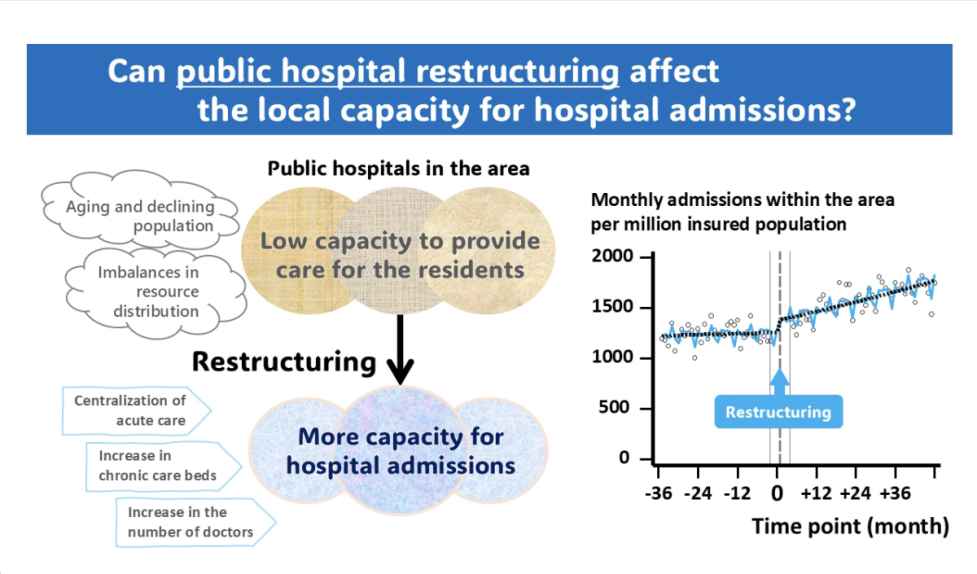
Restructured public hospitals improved elderly hospital admissions by keeping more patients local despite fewer beds, according to a study in BMC Health Services Research.
Restructuring public hospitals has been seen as a way to better align medical resources with regional needs. A recent study published in BMC Health Services Research examined the impact of such restructuring on elderly hospital admissions in Japan. The research team led by Kenji Kishimoto, first author of the study, focused on an area with an aging and declining population.
Before the reform, more than half of elderly residents requiring hospitalization were admitted to hospitals outside their local areas due to limited acute care capacity. The restructuring involved centralizing acute care services while increasing chronic care beds and doctor-to-patient ratios. This approach aimed to improve local healthcare accessibility for the elderly.
Using administrative claims data with statistical models, the team evaluated the effects of these reforms on monthly hospital admissions over a period of 12 months post-restructuring. Their study included almost 59,000 hospital admissions of area residents aged 65 years or older.
The results showed that after restructuring, the number of elderly patients admitted within the local area increased significantly, reaching levels similar to those in hospitals outside the region. This improvement was attributed to enhanced local capacity and more efficient bed utilization.
Dr. Kishimoto noted, "Restructuring public hospitals can help improve regional health care systems by aligning resources with community needs." The study highlights the importance of considering hospital admissions within a broader context when assessing restructuring impacts.
Future research could further explore changes in patient-oriented outcomes such as quality of care and evaluate socioeconomic factors that influence these improvements. This comprehensive approach will provide more nuanced insights into the benefits and challenges of public hospital reorganization.
The findings underscore the need for continued evaluation of healthcare reforms to ensure they effectively address regional health disparities, particularly among vulnerable populations like the elderly.


