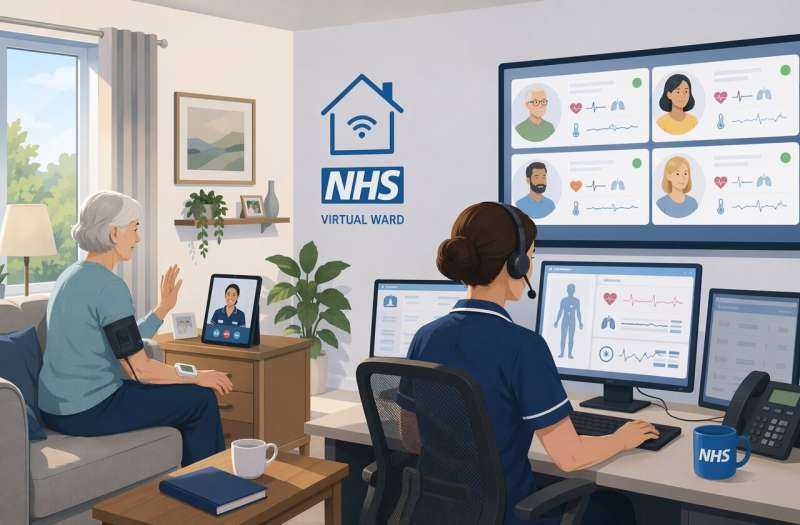
A new study from the University of Manchester examines how safety is maintained in NHS virtual wards, revealing the critical role played by patients and caregivers.
Virtual wards, or hospital at home services, are becoming more prevalent within the National Health Service (NHS) to provide care for individuals who would otherwise require hospitalization. These digital health solutions allow patients to receive medical treatment and monitoring from the comfort of their homes. A recent study, led by researchers from the University of Manchester, delves into the safety measures implemented in these virtual wards.
The research highlights that the traditional roles of clinicians are being complemented by the active involvement of patients and caregivers. These individuals undertake essential risk-management tasks that were previously handled solely by healthcare professionals. By understanding and documenting this dynamic, the study aims to enhance the overall safety and effectiveness of virtual ward care.
This new approach underscores the importance of collaboration between healthcare providers and home-based patients. It emphasizes that while technology plays a crucial role in facilitating these services, it is the everyday vigilance and proactive actions of patients and caregivers that ensure the continuity of safe care. The findings from this study could lead to improved protocols and support systems for those utilizing virtual wards, ensuring better outcomes and experiences for all involved.
The exploration of safety in virtual wards not only highlights the innovative use of technology but also recognizes the unsung efforts of patients and their families who play a vital role in maintaining health at home. This research is pivotal in shaping future strategies to optimize care delivery across both traditional hospitals and digital healthcare platforms.