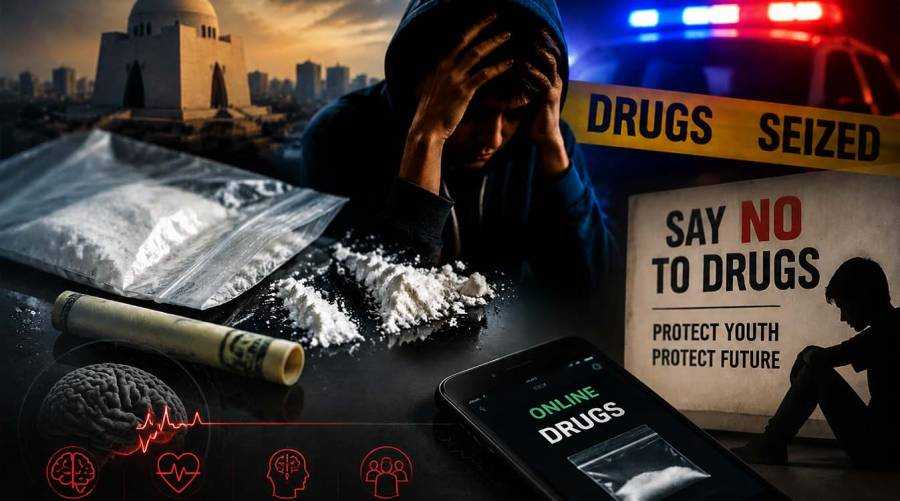
The recent high-profile cocaine trafficking case in Karachi has raised alarms about the growing spread of synthetic drugs among young people, prompting healthcare experts to call for stricter preventive measures.
The recent high-profile cocaine trafficking case involving Anmol alias Pinky has intensified concerns among healthcare professionals and addiction experts over the increasing prevalence of synthetic drugs among students and young adults in Pakistan's urban centers. While police investigations into the Karachi narcotics network continue following the suspect's arrest, medical experts warn that this case reflects a broader public health crisis involving youth addiction, mental health deterioration, and the expanding accessibility of synthetic narcotics through covert online supply systems.
Adding to the growing alarm, the Pakistan Medical Association (PMA) has formally warned that the worsening sale and distribution of cocaine and other narcotic substances now poses a serious threat to Pakistan's younger generation and wider social stability. In an official statement, Dr. Muhammad Ismail Memon, Honorary President of the PMA Karachi, described the situation as "extremely alarming" and urged authorities to implement strict preventive and enforcement measures at every level.
"The sale and distribution of cocaine and other narcotic substances has become a matter of deep concern and a growing public health and security challenge," Dr. Memon said. He warned that narcotics are increasingly reaching areas surrounding schools, colleges, and educational institutions, exposing students and adolescents to substances capable of causing severe physical, neurological, and psychological harm.
Healthcare specialists warn that cocaine and synthetic stimulants can significantly increase the risk of cardiovascular emergencies, panic attacks, severe anxiety, paranoia, depression, hallucinations, violent behavioral episodes, sleep disruption, suicidal thoughts, and long-term drug dependency. Psychiatrists further caution that repeated stimulant exposure during adolescence and early adulthood may interfere with neurological development, emotional regulation, and long-term cognitive health, potentially increasing vulnerability to chronic psychiatric disorders later in life.
Medical experts also fear that social media platforms, encrypted messaging applications, and discreet rider-based delivery systems are making synthetic narcotics more accessible to younger populations while reducing the visibility traditionally associated with street-level drug trafficking. Public health analysts say the evolving digital nature of narcotics distribution is creating new challenges for families, educational institutions, healthcare providers, and law enforcement agencies alike.
"This is no longer only a criminal issue. It is increasingly becoming a mental health, addiction, and youth protection emergency," said a Karachi-based addiction treatment specialist familiar with urban substance abuse trends. The PMA additionally stressed the urgent need for stronger legislation, effective enforcement mechanisms, rehabilitation access, and nationwide awareness campaigns aimed at protecting children and students from drug exposure.
Health experts call for strict regulations to curb rising youth addiction to tobacco and nicotine
Experts say Pakistan continues to face major gaps in addiction prevention, youth counseling services, rehabilitation infrastructure, and mental health support despite growing evidence of substance abuse in urban populations. Healthcare professionals argue that prevention strategies must include family awareness initiatives, school-based education programs, early psychological intervention, and broader public awareness campaigns highlighting the long-term medical consequences of synthetic drug abuse.
The case has also triggered wider public debate after videos circulating on social media showed the accused appearing in court without handcuffs, prompting departmental inquiries and suspension of multiple police personnel over alleged procedural violations. However, healthcare experts caution that the broader concern extends far beyond one criminal case. Analysts warn that unless coordinated prevention strategies are implemented urgently, synthetic drug abuse could evolve into a much larger addiction and mental health crisis among vulnerable youth populations already facing rising social and psychological pressures.