As humans age, their motor control declines, but new research suggests older adults adapt implicitly better than explicitly compared to younger counterparts.
As individuals reach late adulthood, a common and often unnoticed change occurs in their ability to coordinate movements and maintain balance. This phenomenon, broadly referred to as motor control, tends to decline gradually over time. However, the impact of aging on sensorimotor learning—the adaptation of movements based on environmental information—has been less explored.
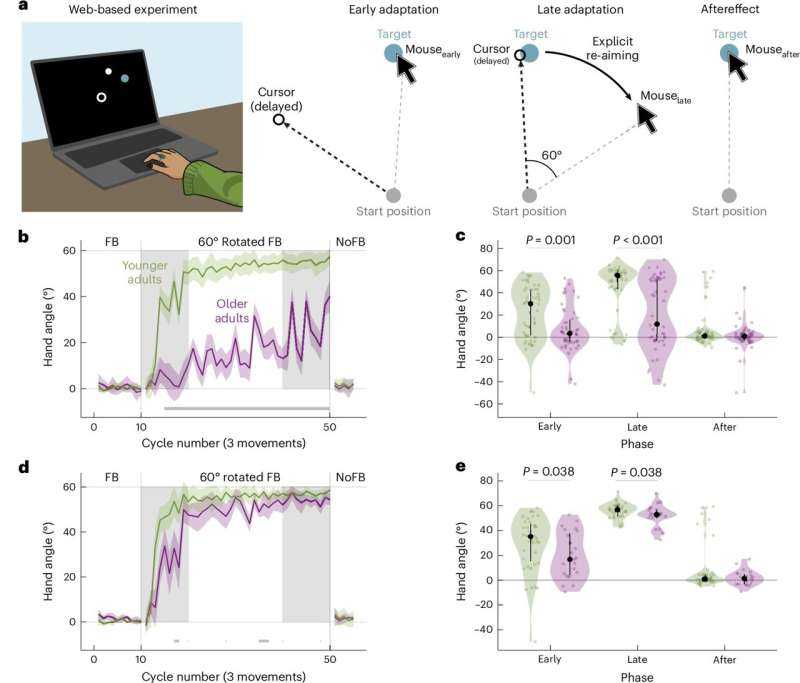
Recent studies have shed light on how older adults navigate these changes. Unlike younger individuals who rely more heavily on explicit strategies (deliberate and conscious processes), older adults appear to adapt implicitly (subconscious and automatic processes). This shift in adaptive mechanisms may explain why some older adults continue to perform well despite declining motor control.
For instance, a study published in the Journal of Neuroscience found that while older participants struggled with tasks requiring explicit strategy application, they performed comparably to younger individuals when relying on implicit learning. The researchers concluded that this shift towards implicit adaptation could be crucial for maintaining functional mobility and independence as people age.
These findings have significant implications for rehabilitation strategies targeting older adults. Traditional approaches often focus on explicit training methods, which may not fully address the adaptive challenges faced by aging populations. Instead, incorporating more implicit learning techniques might better support their needs.
In conclusion, while motor control declines with age, the shift towards implicit adaptation offers a promising avenue for maintaining functional abilities in older adults. Future research should explore how to effectively integrate these implicit strategies into rehabilitation programs to enhance quality of life and independence among aging populations.