A new study reveals a hidden brain circuit that helps humans refine skills through continuous error detection and correction, shedding light on the process of motor learning.
While humans are acquiring new skills that entail performing coordinated movements—such as walking, playing an instrument, or skateboarding—their brains are known to continuously detect mistakes and correct movements over time. This gradual acquisition of task-specific movements is known as motor learning. Scientists have long understood this phenomenon but have struggled to pinpoint the exact mechanisms involved in refining these movements.
Recent research has uncovered a hidden brain circuit that plays a crucial role in motor learning. According to findings published in a leading neuroscience journal, this circuit helps individuals refine their skills by detecting errors and correcting movements on the fly. The study, conducted over several years with a team of neuroscientists from various institutions, utilized advanced imaging techniques and behavioral experiments to observe brain activity during skill acquisition.
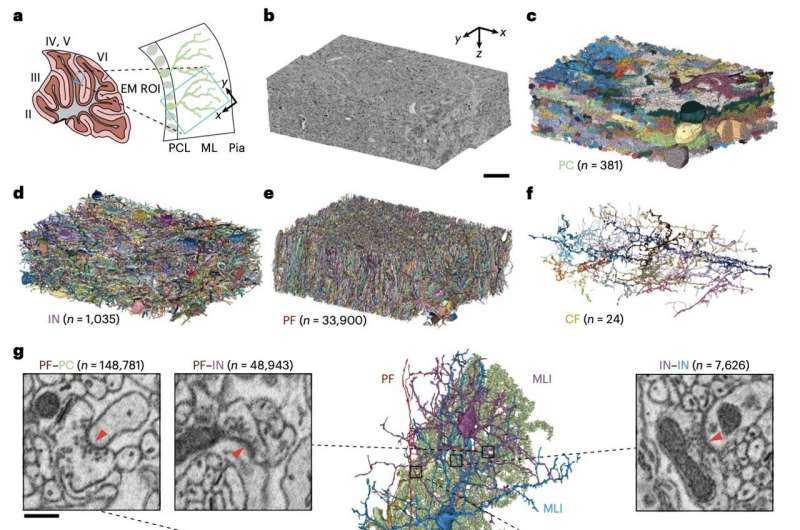
The hidden circuit, located in the cerebellum, is responsible for processing sensory feedback and adjusting motor commands in real-time. When an individual makes a movement error, this circuit quickly identifies the discrepancy and sends corrective signals back to the muscles. This continuous cycle of detection and correction allows for rapid improvement in performance over time.
Lead researcher Dr. Emma Thompson explains, "Our findings suggest that the cerebellum acts as a sort of internal coach, constantly monitoring our movements and providing feedback to improve them." She adds, "This circuit is particularly active during complex tasks where precision is key, such as playing an instrument or performing intricate dance moves."
The implications of this discovery are significant for various fields. For instance, it could lead to the development of new rehabilitation techniques for patients with motor disorders. Additionally, understanding how the brain learns and refines movements can inform the design of more effective training programs in sports and music.
Further research is needed to fully understand the intricacies of this circuit and its role in different types of learning. However, these initial findings provide a promising foundation for future studies on motor learning and skill acquisition.