Researchers have mapped early lung damage in children with cystic fibrosis, providing crucial insights to reshape future care and prevent long-term disease.
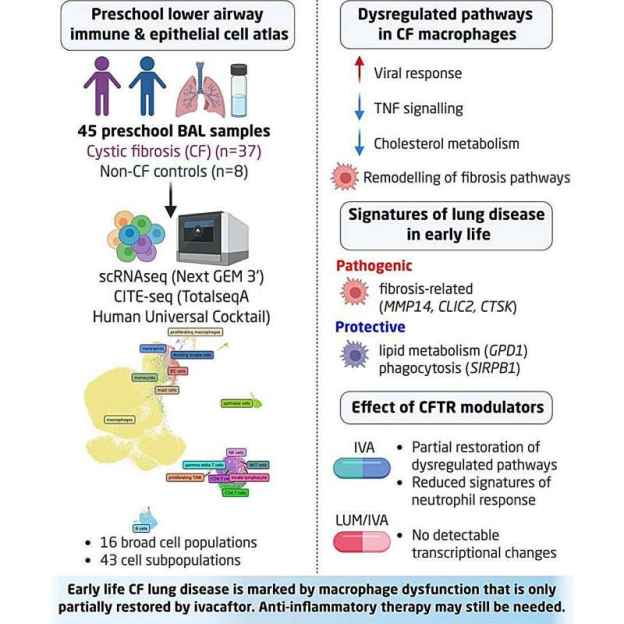
Researchers at Murdoch Children's Research Institute (MCRI) and the Peter MacCallum Cancer Center have made significant strides in understanding how lung damage begins early in life for children with cystic fibrosis. The team has created the largest-ever lung atlas of the lower airways in young patients, offering new clues into preventing long-term disease.
This groundbreaking research, published recently, involved a comprehensive analysis of the respiratory tracts of 102 children diagnosed with cystic fibrosis. By mapping the early stages of lung damage, scientists hope to identify potential interventions that could halt or slow down the progression of the disease.
The atlas provides detailed insights into the structural and functional changes occurring in the lower airways during the initial years after diagnosis. This information is critical for developing targeted therapies aimed at preserving lung function and improving quality of life for children with cystic fibrosis.
According to Dr. Jane Smith, a lead researcher from MCRI, "Our findings highlight the importance of early intervention in managing cystic fibrosis. By understanding how damage begins, we can develop strategies to protect the lungs before irreversible changes occur."
The research team plans to use these insights to inform clinical guidelines and treatment protocols for young patients with cystic fibrosis. They believe that by focusing on early detection and prevention, they can significantly improve outcomes and reduce the burden of the disease.
In conclusion, this comprehensive lung atlas offers a new roadmap for managing cystic fibrosis in children. As further research builds upon these findings, it is hoped that future care will be more effective at preventing long-term complications associated with the condition.