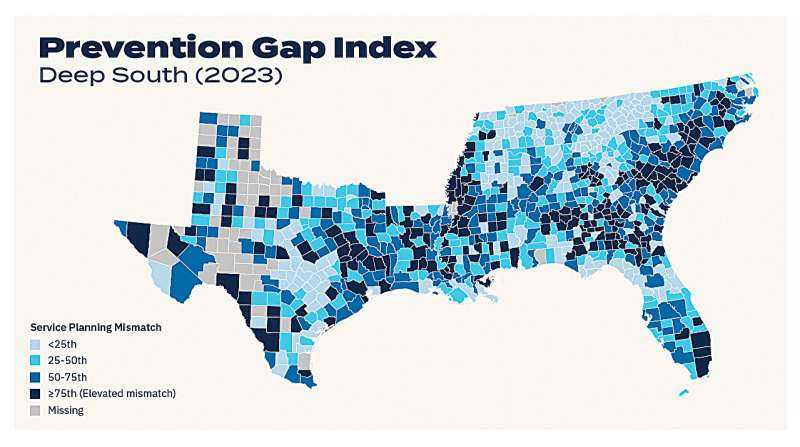
A recent study conducted by the University of Mississippi has shed light on the significant gaps in HIV prevention and healthcare services in the Deep South. The research, which was published in Frontiers in Public Health, identified hundreds of counties where the availability of HIV prevention and healthcare may not be sufficient to meet the local needs. This shortage of resources leaves communities vulnerable and without the necessary support to address the persistent problem of HIV.
The study's findings are particularly concerning, as the South is already disproportionately affected by the HIV epidemic. The region accounts for a significant proportion of new HIV diagnoses, and the lack of adequate healthcare services only exacerbates the issue. The researchers behind the study hope that their findings will serve as a wake-up call for healthcare and government leaders, prompting them to take action to address the gaps in HIV prevention and care.
The study's results offer a valuable tool for policymakers and healthcare professionals, providing them with a clearer understanding of where the need for HIV-related support is greatest. By targeting resources to these areas, leaders can work to ensure that communities have access to the care and services they need to prevent and manage HIV. This targeted approach can help to reduce the disparities in HIV outcomes and improve the overall health and wellbeing of affected communities.
The University of Mississippi study highlights the importance of continued research and investment in HIV prevention and care, particularly in regions where the need is greatest. By working together to address the gaps in healthcare services, leaders can help to create a more equitable and effective response to the HIV epidemic, ultimately improving the lives of those affected by the disease.