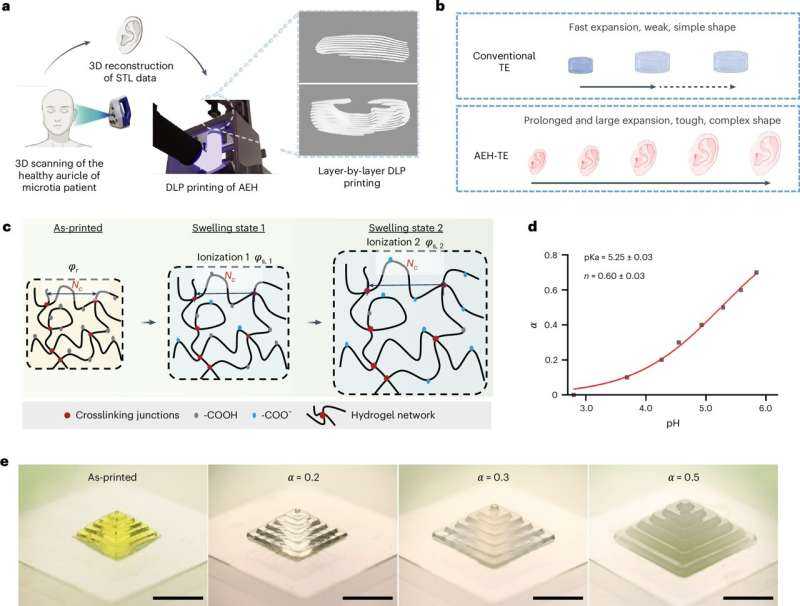
A new technique using custom 4D-printed implants is revolutionizing reconstructive surgery by providing a less painful method for tissue expansion and reconstruction.
Tissue expansion has long been a common technique in reconstructive surgery, where surgeons gradually stretch nearby skin to grow extra tissue needed for rebuilding areas such as the ear, breast, or nose. However, this process can be both time-consuming and uncomfortable for patients. Recently, researchers have developed custom 4D-printed implants that offer a more efficient and less painful alternative.
These innovative implants are designed using advanced 3D printing technology combined with real-time monitoring capabilities to ensure precise fit and functionality. The "4D" aspect refers to the additional dimension of time, allowing for dynamic adjustments during the healing process. This means that as the surrounding tissue grows, the implant can be fine-tuned to maintain optimal contact and support.
The use of 4D-printed implants not only enhances patient comfort but also accelerates the overall recovery timeline. Surgeons can customize these implants based on individual patient needs, ensuring a better fit and more predictable outcomes. This technology is particularly beneficial for complex cases where traditional tissue expansion methods may be insufficient or too painful.
Moreover, the precision of 4D printing allows for the creation of highly specialized implants that mimic natural tissue properties. This not only improves aesthetic results but also reduces the risk of complications such as infection or improper healing. As this technology continues to evolve, it holds great promise for transforming reconstructive surgery and improving patient experiences across various medical fields.
In conclusion, custom 4D-printed implants represent a significant advancement in reconstructive surgery by offering a more comfortable and effective solution compared to traditional tissue expansion methods. With ongoing research and development, these innovative tools are poised to revolutionize the field of plastic and reconstructive surgery, providing patients with better outcomes and enhanced quality of life.