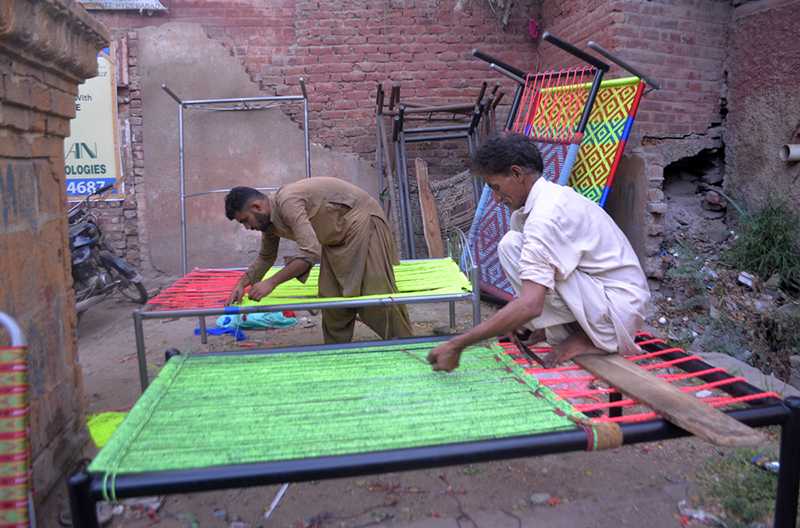
Traditional charpoys are being crafted at a workshop where skilled workers weave and prepare these iconic woven beds with precision and care.
In a small workshop, a group of skilled artisans are busy preparing traditional charpoys, also known as woven beds, which have been an integral part of Pakistani culture for centuries. The charpoys are meticulously crafted by hand, with each strand of rope carefully woven to create a sturdy and comfortable bed.
The workshop is filled with the sound of weaving and the smell of freshly cut wood, as the artisans work tirelessly to create these beautiful pieces of furniture. The charpoys are not only functional but also serve as a symbol of hospitality and tradition in Pakistani culture. They are often used in homes, guesthouses, and public areas, providing a comfortable place for people to rest and socialize.
The artisans use traditional techniques and materials to craft the charpoys, which are made from high-quality wood and rope. The weaving process is time-consuming and requires great skill and patience, but the end result is well worth the effort. The charpoys are not only durable but also aesthetically pleasing, with intricate patterns and designs that reflect the rich cultural heritage of Pakistan.
As the demand for traditional charpoys continues to grow, the artisans at the workshop are working hard to meet the needs of their customers. They take great pride in their work, knowing that each charpoy is a testament to the rich cultural traditions of Pakistan. The charpoys are not only a piece of furniture but also a symbol of the country's rich history and heritage, and the artisans are dedicated to preserving this tradition for future generations.
The workshop is a testament to the skill and craftsmanship of Pakistani artisans, who are dedicated to preserving traditional techniques and methods. The charpoys crafted at the workshop are a reflection of the country's rich cultural heritage, and they continue to play an important role in Pakistani society. As the artisans continue to weave and craft these beautiful pieces of furniture, they are helping to keep alive a tradition that is an integral part of Pakistani culture and identity.