Researchers at the University of North Carolina School of Medicine have made a significant discovery in the fight against non-Hodgkin lymphoma. In a study published in the Proceedings of the National Academy of Sciences, Maria White, Ph.D., and her team led by Blossom Damania, Ph.D., identified a new "weak spot" in EBV-positive non-Hodgkin lymphoma that could lead to more effective treatments for this aggressive blood cancer. The Epstein-Barr virus (EBV), which is highly contagious, has been linked to the development of certain cancers including non-Hodgkin lymphoma. This study highlights a key enzyme called NEK2, which plays a crucial role in cancer cell division and is overactive in EBV-positive NHL cells.
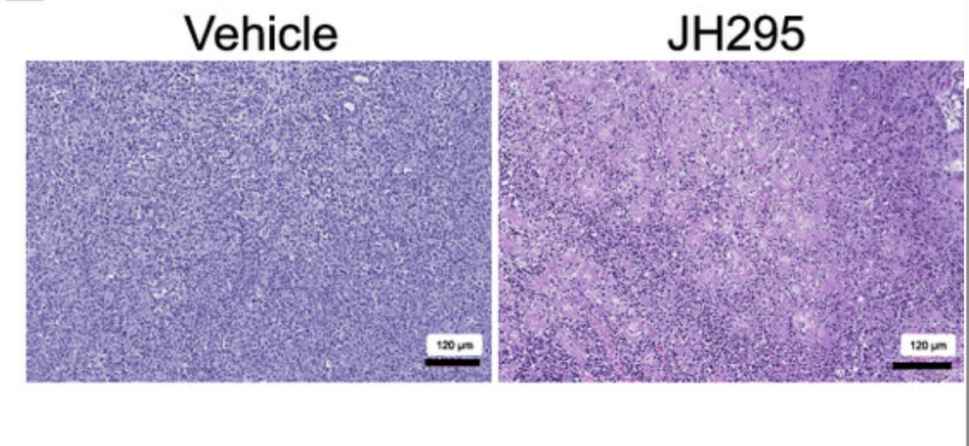
By selectively inhibiting this enzyme, researchers found that it could significantly reduce the growth and survival of these cancerous cells. Maria White, Ph.D., emphasizes the importance of targeting NEK2 specifically for EBV-positive non-Hodgkin lymphoma patients: "Many EBV-positive lymphomas can rapidly develop resistance to treatment, leading to poor patient outcomes. Our research indicates that targeting a single enzyme may offer a more effective approach for the treatment of EBV-positive NHL." The study involved both in vitro and preclinical models. In cellular models, inhibiting NEK2 resulted in the death of some lymphoma cells and made them more susceptible to other anti-cancer treatments without affecting healthy cells.
Further tests using a preclinical cancer model demonstrated that NEK2 inhibition significantly prolonged survival rates and reduced tumor cell levels throughout the body. "This is an exciting development as it opens up new avenues for treating EBV-positive non-Hodgkin lymphoma," said Robert Egan, Associate Editor of Science X. "The next step will be to test these findings in clinical trials." Future studies are planned to explore the potential of NEK2 inhibitors in actual patients with non-Hodgkin lymphoma. This breakthrough could provide a new therapeutic option for those affected by this disease.
As researchers continue to refine and develop treatments based on these discoveries, hope remains high that more effective therapies will be available in the near future.