Researchers at UCLA Health have identified the MYH9 gene as a key player in the formation of fibrous plaques, which are more common in women and can lead to heart attacks. Learn more about this breakthrough study.
Researchers at UCLA Health have made a significant discovery that sheds light on why women are more likely than men to develop certain types of artery plaque linked to heart disease. In a study published in Circulation Research, investigators found that the MYH9 gene plays an important role in the formation of fibrous plaques, which are generally less prone to rupture but can still cause serious cardiac events through plaque erosion.
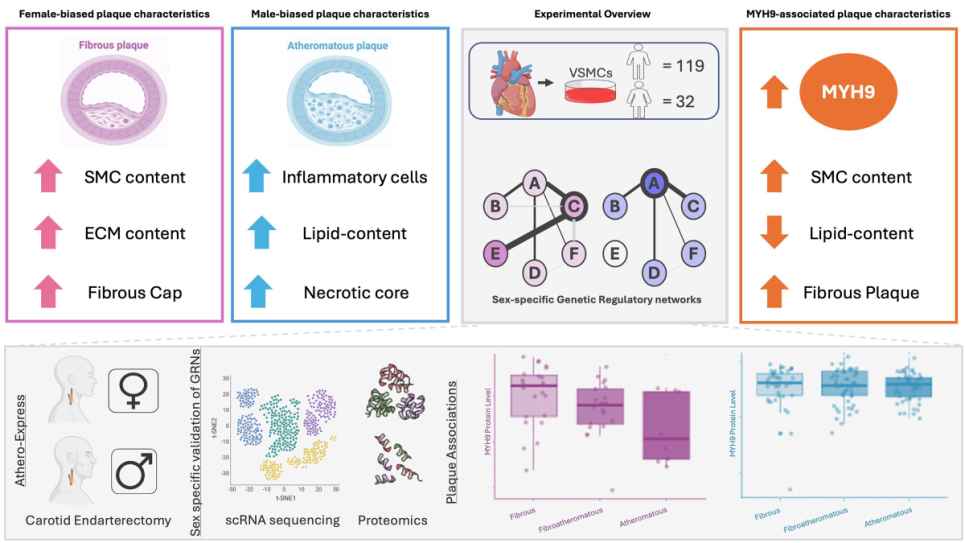
Atherosclerosis, the buildup of plaque in arteries, is the underlying cause of most heart disease. While research has primarily focused on unstable plaques that can rupture and trigger heart attacks, this study highlights the importance of fibrous plaques, which tend to have thicker caps and different biological characteristics. Fibrous plaques are more common in women, particularly those under age 50, but their underlying mechanisms have remained unclear.
Dr. Mete Civelek, a professor at the David Geffen School of Medicine at UCLA and corresponding author of the study, although heart disease is the leading cause of death for women worldwide, it often goes undiagnosed due to symptoms that may not "look like" what we typically see in men's heart disease. Civelek's team aimed to uncover the biology behind these sex-specific differences.
The researchers analyzed gene activity in vascular smooth muscle cells from more than 150 human donors, including 119 males and 32 females. They identified two female-biased "gene programs" associated with inflammation, cell structure, and vascular remodeling. These findings suggested that MYH9 may influence how vascular cells respond to their environment, helping to shape plaque structure in a sex-specific way.
Civelek's team isolated cells from the arteries of hearts donated for transplantation and used advanced analytical methods to compare gene activity between women and men. They found that higher levels of MYH9 were linked to plaques with more smooth muscle cells and less fat, which are features of fibrous plaques. Additionally, MYH9 was more active in areas of plaque that help form the fibrous cap, a layer crucial for plaque stability.
The study's results suggest that understanding how genes like MYH9 interact within gene networks could lead to better personalized treatments for heart disease, especially among women. Civelek emphasized that while findings from this study won't immediately change patient care, they provide valuable insights into the biology of heart disease and help pave the way for more targeted therapies.
Moving forward, researchers plan to investigate exactly how MYH9 influences plaque formation in both sexes and explore whether it could be a therapeutic target. Additional collaboration with Dr. Karen Reue's lab aims to determine if sex hormones or sex chromosomes are responsible for sex-specific differences in MYH9 activity.
These findings contribute to our growing understanding of the complex interplay between genetics, environment, and disease susceptibility, particularly when considering gender disparities in cardiovascular health. As more research is conducted, we may see improved diagnostic tools and personalized treatment options that take into account individual biological variations.