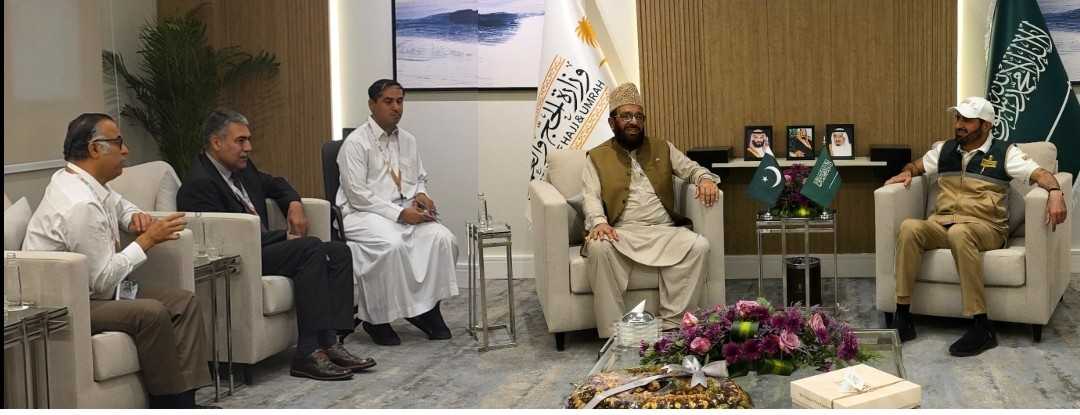
Federal Minister for Religious Affairs Sardar Muhammad Yousuf met with Saudi counterpart Dr. Tawfiq bin Fawzan Al-Rabiah to review ongoing Hajj operations and discuss future transport and residential reforms.
Pakistani and Saudi ministers recently convened a meeting to review the current arrangements for the Hajj pilgrimage and to outline plans for future improvements. Federal Minister for Religious Affairs Sardar Muhammad Yousuf met with Dr. Tawfiq bin Fawzan Al-Rabiah, the Saudi Minister of Hajj and Umrah, to discuss these critical matters.
During their meeting, both ministers focused on enhancing the logistical support for pilgrims during the Hajj season. They reviewed ongoing operations and identified areas where improvements could be made. The discussions centered around optimizing transportation systems to ensure smoother movement of pilgrims between different sites in Saudi Arabia. Additionally, they explored potential reforms in residential accommodations to provide better living conditions for those undertaking the pilgrimage.
The meeting also touched upon long-term strategies aimed at making the Hajj experience more comfortable and efficient for participants. These plans include investing in infrastructure development, improving communication networks, and streamlining administrative processes. Both ministers expressed their commitment to working closely together to ensure that future Hajj seasons are successful and meet the expectations of millions of pilgrims.
This collaborative effort between the two countries underscores the importance of the Hajj pilgrimage not only for religious purposes but also as a significant economic and social event. The ongoing dialogue and cooperation between Pakistani and Saudi officials highlight their shared goal of providing the best possible experience for all pilgrims, ensuring safety, comfort, and ease of travel.
The discussions held during this meeting are expected to pave the way for substantial reforms that will benefit not only current pilgrims but also those in future years. By addressing both immediate needs and long-term goals, the two nations aim to enhance the overall Hajj experience, making it more accessible and enjoyable for millions of Muslims worldwide.