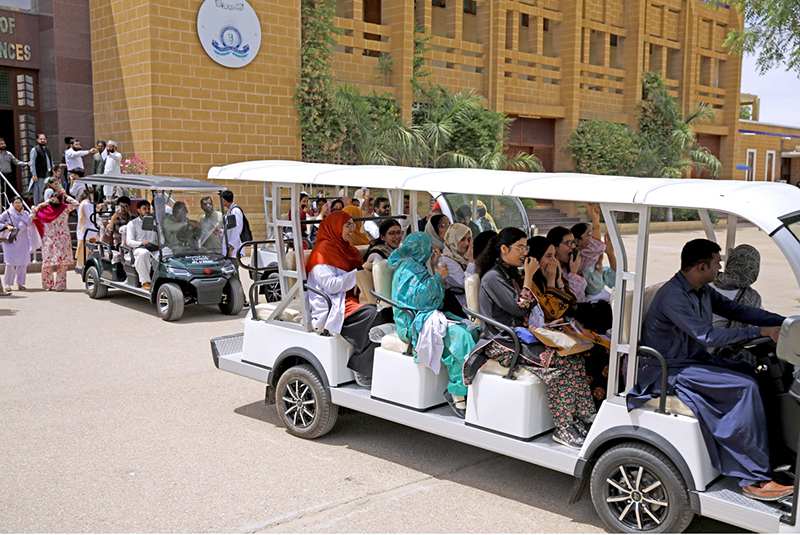
A newly launched electric shuttle service at Liaquat University of Medical & Health Sciences (LUMHS) in Jamshoro is improving transportation for students and teachers.
A recently inaugurated electric shuttle service has significantly enhanced mobility for the students and faculty members at Liaquat University of Medical & Health Sciences (LUMHS), located in Jamshoro. The new vehicle, designed to be environmentally friendly and energy-efficient, offers a convenient alternative to traditional modes of transportation.
The introduction of this electric shuttle marks a significant step towards sustainable commuting within the university campus. It has been warmly welcomed by both students and staff alike, who have praised its eco-friendly nature and reliability.
"Since we started using the electric shuttle, it's much quieter than our previous options, and I've noticed fewer traffic jams around the university," said Dr. Muhammad Ali, a medical professor at LUMHS. "It’s not only beneficial for the environment but also makes my commute more comfortable."
The shuttle service operates on fixed routes connecting key areas of the campus such as the main entrance, library, cafeteria, and lecture halls. It runs from morning until evening, providing round-the-clock convenience to the university community.
To ensure smooth operation, a team of trained drivers has been assigned to operate the electric vehicles. They are equipped with modern technology that includes GPS tracking systems for route optimization and real-time communication tools for coordination among staff members.
The initiative is part of LUMHS's broader commitment to sustainability and improving the quality of life for its students and faculty. The university administration hopes this new service will not only reduce carbon emissions but also contribute to a healthier environment on campus.
Community leaders have expressed their satisfaction with the new transportation arrangement, noting that it has improved accessibility and reduced congestion around the institution. "This is a commendable move by LUMHS," said Umme Farwa Hamdani, Divisional Director Social Welfare in Jamshoro. "It shows a forward-thinking approach towards sustainable development."
The electric shuttle service at LUMHS exemplifies how universities can lead by example in promoting environmental responsibility and enhancing the quality of life for their constituents. As more institutions adopt similar initiatives, it is hoped that such services will become commonplace across educational settings worldwide.
In conclusion, the launch of this innovative electric shuttle marks a promising development not just for LUMHS but also for the broader community. It serves as a model for sustainable urban planning and transportation solutions in higher education institutions.