The Institute of Regional Studies (IRS) organized a webinar discussing how tensions in the Strait of Hormuz can be managed to ensure smooth energy flows in the region.
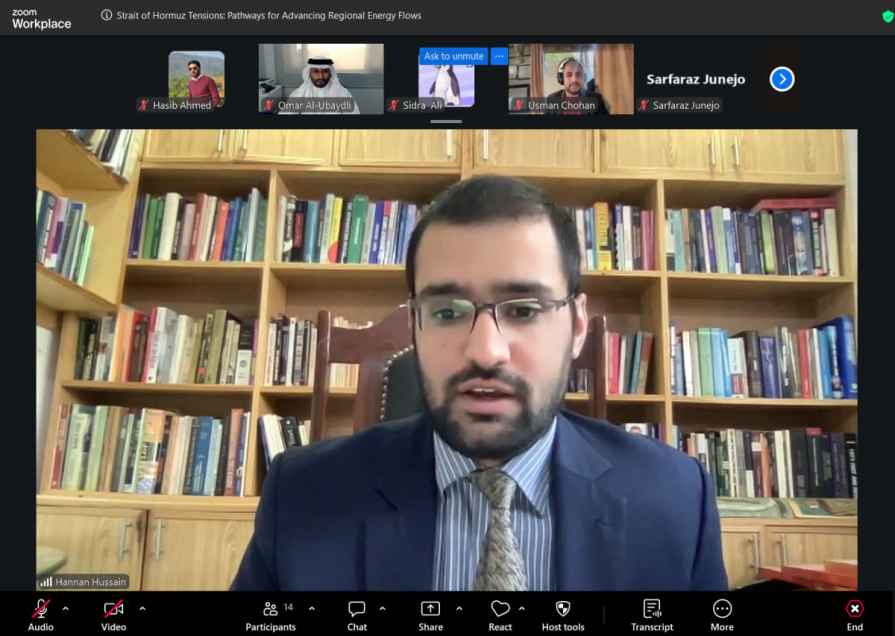
The Institute of Regional Studies (IRS) recently hosted an insightful webinar titled “Strait of Hormuz Tensions: Pathways for Advancing Regional Energy Flows.” The event featured Dr. Omar Al-Ubaydli, Research Director at the Bahrain Center for Strategic, International and Energy Studies, as the principal speaker.
Dr. Al-Ubaydli’s presentation delved into the current geopolitical tensions surrounding the Strait of Hormuz, a critical maritime passage through which approximately 20% of global oil supplies pass each day. He highlighted how these tensions not only pose significant risks to international trade but also threaten regional stability and economic growth.
The webinar explored potential pathways for advancing energy flows in the region despite ongoing challenges. Dr. Al-Ubaydli proposed several strategies, including increased cooperation among nations, enhanced transparency in maritime operations, and the development of alternative shipping routes. He emphasized the importance of diplomatic efforts to de-escalate tensions and foster a collaborative environment that prioritizes stability.
Attendees from various sectors, including government officials, industry experts, and academic researchers, engaged in lively discussions following Dr. Al-Ubaydli’s presentation. The conversation touched on the role of international organizations such as OPEC and the International Energy Agency (IEA) in mediating conflicts and ensuring energy security.
The webinar underscored the critical need for a multi-faceted approach to address the challenges posed by Strait of Hormuz tensions. By fostering dialogue, promoting transparency, and exploring innovative solutions, stakeholders can work towards a more secure and reliable energy supply chain for the region and beyond.
This event not only provided valuable insights but also highlighted the ongoing commitment of institutions like IRS to addressing complex regional issues through collaborative platforms. As global energy markets continue to evolve, such initiatives will play a crucial role in maintaining stability and ensuring sustainable energy flows.