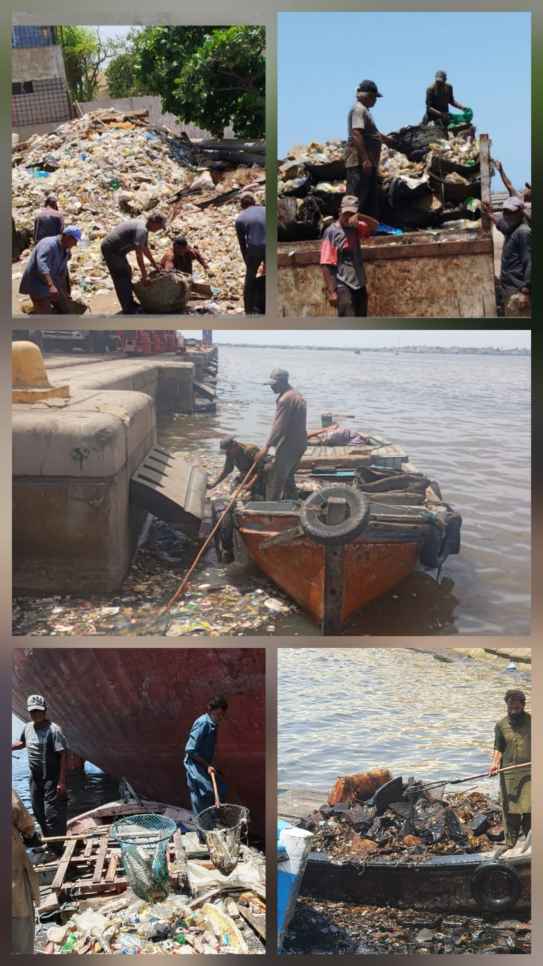
More than 58,000 kg of floating waste removed from Karachi harbour in clean-up campaign aimed at protecting marine ecosystems and promoting a blue circular economy.
Federal Minister for Maritime Affairs Muhammad Junaid Anwar Chaudhry announced on Monday that over 58,000 kilograms of floating waste had been successfully removed from Karachi harbor during an intensified cleanup effort. This initiative, known as "Cleaner Port, Healthier Marine Ecosystem," is part of the government's broader strategy to combat marine pollution and safeguard coastal biodiversity while fostering a blue circular economy.
The campaign, which began in earnest following widespread environmental concerns about the harbor's cleanliness, has been met with significant public support. Local residents have praised the initiative for improving water quality and reducing health risks associated with contaminated waters.
Environmental experts highlight that this cleanup effort is crucial not only for Karachi but also for the broader region. The city’s port serves as a vital link between landlocked areas in Pakistan and global markets, making it essential to maintain its cleanliness and functionality.
Chaudhry emphasized the importance of these efforts: "By removing waste from our harbors, we are taking significant steps towards protecting marine ecosystems and promoting sustainable practices that benefit both people and the planet."
The blue circular economy concept being promoted by the government involves recycling and reusing resources in a way that minimizes environmental impact. This approach is particularly relevant for coastal cities like Karachi where industries often rely heavily on natural resources.
As part of this initiative, various stakeholders including local authorities, NGOs, and private sector entities have been collaborating to ensure long-term sustainability. The cleanup operation has not only addressed immediate waste accumulation but also set a precedent for future management practices that prioritize environmental health over economic growth in the maritime sector.
The success of this campaign could serve as a model for other coastal cities facing similar challenges, encouraging them to adopt similar strategies and invest in cleaner ports and healthier marine environments.