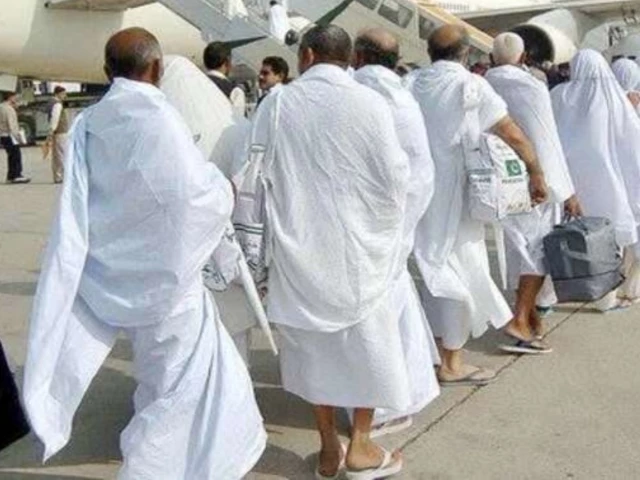
Millions of pilgrims complete the annual Hajj pilgrimage despite challenging conditions, including high temperatures and regional conflicts.
Thousands of faithful began their departure from the holy city of Makkah on Friday after completing one of the world's largest religious gatherings. The Hajj, which this year saw over 1.7 million participants from 165 countries, concluded amidst scorching heat and the backdrop of ongoing Middle Eastern conflicts. More than 30,000 Iranians also made the journey to Makkah, though only about a third of the originally expected 86,000.
Ahmed Mamdouh, a 37-year-old Egyptian pilgrim performing his first Hajj, expressed immense relief and happiness: "I can't believe I completed the Hajj. It was truly exhausting, especially in such hot weather." His words echoed those of Algerian pilgrim Al-Zaoui, 74, who said with tears in his eyes, "It was our dream to perform the Hajj together after 50 years of marriage. Now that dream has come true."
On Friday, pilgrims completed the third day of the stoning ritual at Mina, a valley southeast of Makkah. Here, they threw pebbles at concrete pillars symbolizing the devil as part of their religious observance. Following this, they boarded buses to the Grand Mosque for the farewell "tawaf," walking seven times around the Kaaba.
The Hajj is one of the five pillars of Islam and requires Muslims with means to perform it at least once in their lifetime. This year's pilgrimage took place under intense heat, with temperatures exceeding 40C. In response to the tragic loss of over 1,300 lives during the 2024 Hajj due to extreme heat, Saudi authorities implemented heat-mitigation measures. These included more shaded areas and thousands of additional health workers.
Despite the challenges, millions of pilgrims persevered, making this year's Hajj a testament to their faith and determination.