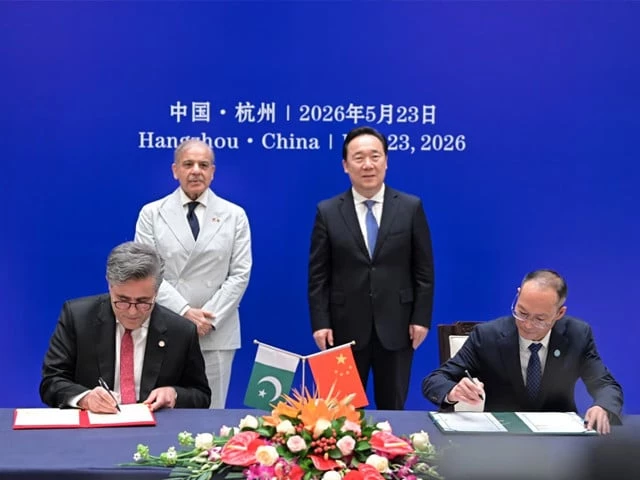
Prime Minister Shehbaz Sharif's visit to Hangzhou highlights renewed focus on the China-Pakistan Economic Corridor (CPEC), with plans for industrialisation and innovation at its core.
Prime Minister Shehbaz Sharif has embarked on a significant diplomatic trip to Hangzhou, Zhejiang Province, as part of an important high-level exchange between Pakistan and China. The visit, which runs from May 23 to 26, is set against the backdrop of the 75th anniversary of diplomatic relations between the two nations.
During his stay in Islamabad on Thursday, Prime Minister Shehbaz highlighted the enduring nature of Pakistan-China friendship, emphasizing that China has consistently supported Pakistan during both prosperity and adversity. "Earthquakes, floods, peace and difficult times—China has always stood by Pakistan with unwavering support," he stated.
The China-Pakistan Economic Corridor (CPEC), launched in 2013, remains a cornerstone of bilateral ties. According to Chinese Ambassador Jiang Zaidong, CPEC is a flagship project of the Belt and Road Initiative, having attracted over $25.9 billion in direct investment and creating more than 260,000 jobs. Key projects under CPEC have significantly enhanced Pakistan's energy security, infrastructure, and regional connectivity.
At the seventh round of the China-Pakistan Foreign Ministers' Strategic Dialogue in January, both countries agreed to accelerate work on an upgraded version of the corridor—CPEC 2.0—which aims to shift focus from infrastructure development to industrialisation, innovation, and inclusive growth. Pakistan's Minister for Planning, Development and Special Initiatives Ahsan Iqbal expressed hope that CPEC 2.0 would transform the project into a "corridor of hope, innovation, opportunity, and prosperity."
Rashid Safi, an expert on Pakistan-China and Afghanistan affairs, described Prime Minister Shehbaz's visit as strategically important for regional stability and economic cooperation. He the visit is taking place at a critical moment, with both countries celebrating 75 years of diplomatic relations amid shifting geopolitical dynamics.
Safi highlighted that the prime minister’s first stop in Hangzhou, one of China’s leading centers for advanced technology, e-commerce, artificial intelligence, and the digital economy, carries special significance. The visit is expected to focus on economic cooperation, investment, technology transfer, industrial collaboration, agriculture, and regional connectivity. Safi also under CPEC 2.0, both countries are placing emphasis on youth employment, agricultural reforms, and regional trade connectivity.
The visit will also address broader regional developments, including tensions involving the United States and Iran, the Middle East situation, energy supply routes, Afghanistan, and regional stability. Both nations favor dialogue, diplomacy, and economic cooperation over conflict, emphasizing that connectivity and confidence-building are essential for regional prosperity.
Prime Minister Shehbaz's visit underscores the deep-rooted friendship between Pakistan and China, recognized globally as an all-weather strategic cooperative partnership. The 75th anniversary celebrations reflect both nations' commitment to shared development, regional stability, economic cooperation, and a more connected Asia.