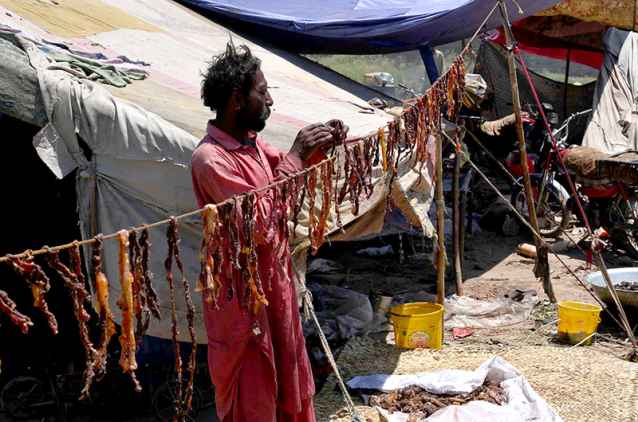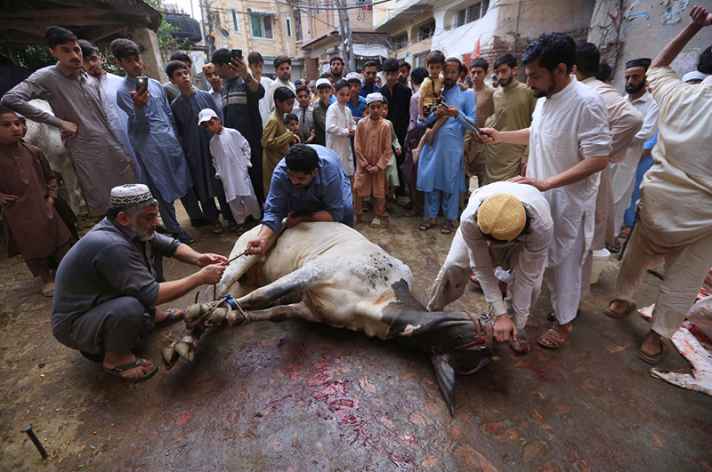
In the bustling provincial capital, butchers are actively carrying out the traditional rituals of slaughtering animals for Eid-ul-Azha as devotees prepare to offer sacrifices.
Butchers in the provincial capital are busily engaged in the ritualistic process of slaughtering sacrificial animals on the third day of Eid-ul-Azha. The air is thick with the sounds of knives slicing through flesh and the pungent smell of freshly slaughtered meat, creating a vivid scene that marks this significant Islamic festival.
Devotees from across the city are bringing their livestock to designated slaughterhouses or local butchers' shops where they can perform the ritual of sacrifice. This year, the third day of Eid-ul-Azha has seen an increased activity as families and communities come together to fulfill their religious obligations.
The provincial capital, known for its vibrant cultural and religious practices, is abuzz with preparations. Slaughterhouses are operating at full capacity, with workers handling animals with precision and care. The process involves a swift incision on the animal’s throat to ensure a quick and painless death, followed by prayers and distribution of meat among family members and the less fortunate.
Local butchers report an uptick in demand for both live animals and prepared meat products. This surge in activity is not only reflective of the religious significance of the day but also highlights the economic importance of the festival to the local economy. The sale of meat, along with other related goods, contributes significantly to the commercial activities during this period.
As the third day progresses, the atmosphere remains solemn yet filled with a sense of community and shared purpose. Families gather around to share in the communal meal that follows the sacrifice, reinforcing bonds and traditions passed down through generations.
The bustling activity in the provincial capital serves as a testament to the enduring relevance and importance of Eid-ul-Azha in the lives of Muslims worldwide.