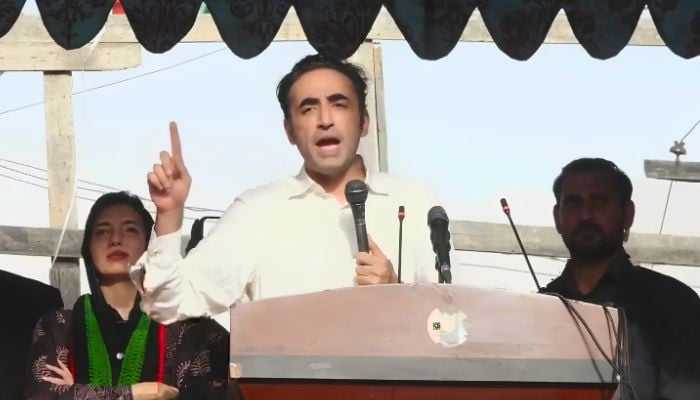
PPP Chairman Bilawal Bhutto-Zardari addresses concerns over the potential abolition of BISP and calls for extending 18th Amendment powers to Gilgit-Baltistan during a rally in Skardu.
Pakistan Peoples Party (PPP) Chairman Bilawal Bhutto-Zardari recently addressed an election rally in Skardu, Gilgit-Baltistan, where he warned against the federal government's plans to abolish the Benazir Income Support Programme (BISP). Speaking at the event on June 2, 2026, Bilawal emphasized that such a move would be detrimental to the region and its people.
During his speech, Bhutto-Zardari highlighted the importance of BISP in providing essential support to vulnerable communities. He argued that the federal government's intentions could lead to significant hardships for those relying on this scheme. "The Centre is seeking to abolish BISP," he stated, adding, "This move would disproportionately affect Gilgit-Baltistan and other remote areas."
Bilawal also called for extending the powers of the 18th Amendment to Gilgit-Baltistan (GB), asserting that the region should not be left to manage such crucial social welfare programs alone. "We must ensure that GB's voice is heard in decision-making processes," he said, urging for a more inclusive approach to governance.
Furthermore, Bhutto-Zardari touched on broader regional concerns, stating, "The Muslim world is bearing the burden of the Middle East war." He emphasized the need for solidarity and support among Muslim nations in addressing global challenges.
Bilawal's rally came at a time when political tensions are high, with the federal government facing criticism over its handling of various social welfare programs. His call to extend 18th Amendment powers reflects the ongoing debate around devolution and centralization in Pakistan.
In conclusion, Bilawal Bhutto-Zardari's address underscores the importance of maintaining robust social safety nets and ensuring equitable distribution of power across regions. As the country grapples with internal and external challenges, his stance highlights the need for a balanced approach to governance and welfare programs.