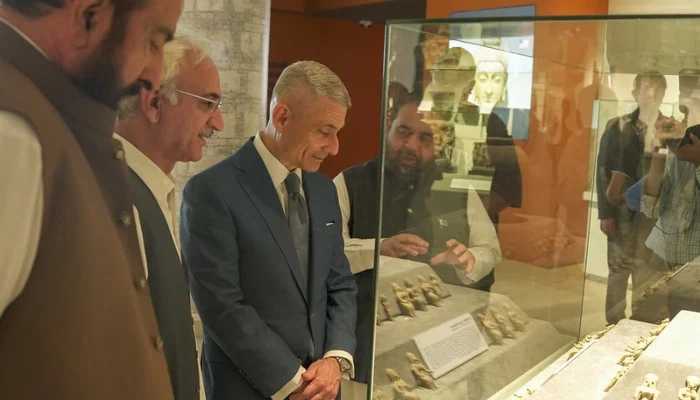
The United States has repatriated over 450 cultural artefacts from Pakistan, including a rare Buddhapada sculpture valued at $1.1 million, marking significant international cooperation against antiquities trafficking.
The United States has returned more than 450 culturally significant artefacts to Pakistan in a ceremony held at the Islamabad Museum on Wednesday. The repatriated collection includes historically important objects that were illegally removed from the country and later identified and recovered through close collaboration between US law enforcement agencies and Pakistani authorities, according to The News.
The artefacts will now be preserved and displayed in Pakistan, allowing scholars and the public to reconnect with an important part of the nation's cultural legacy. These items include a rare 2nd-century CE Buddhapada sculpture valued at $1.1 million that was looted from Pakistan in the 1980s and trafficked to New York.
Among the recovered artefacts is a Gandharan frieze depicting Buddhist figures, ancient Mehrgarh terracotta figurines dating back to 3500-2600 BCE, and a statue of the Bodhisattva Maitreya. Additionally, the seizures include a Gold Strato I coin from 105-85 BCE that was recovered in 2023.
These efforts have led to multiple convictions and underscore ongoing international cooperation to combat illicit antiquities trafficking. The Antiquities Trafficking Unit (ATU) of the Manhattan District Attorney's Office played a crucial role in recovering these artefacts, which were part of smuggling networks involving foreign-operated criminal organizations.
The repatriation ceremony was attended by US Assistant Secretary Paul Kapur, who expressed appreciation for Pakistan's efforts to combat antiquities theft and trafficking. "This is an important step towards preserving our shared cultural heritage," he said. The event highlighted the significance of such international cooperation in safeguarding historical treasures from being lost forever.
The return of these artefacts not only strengthens bilateral relations but also serves as a reminder of the importance of protecting cultural heritage for future generations. As scholars and visitors can now view these objects in their homeland, they will have an opportunity to learn more about Pakistan's rich history and contribute to its ongoing preservation efforts.