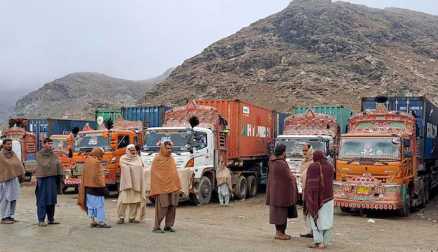
Transporters protest in Landi Kotal border area for return of vehicles stuck in Afghanistan. #AfghanistanVehiclesStranded
A large number of transporters staged a sit-in protest on Monday at Khyber Takiya, a border region along the Pakistan-Afghanistan frontier, demanding the release of vehicles that are stranded in Afghanistan. The protesters gathered to voice their frustration and seek resolution for the issue affecting many businesses and individuals who rely on these vehicles for trade and other operations.
The situation has been ongoing for several weeks, with transporters reporting difficulties in moving goods across the border due to bureaucratic delays and security concerns. This protest comes as a response to repeated calls from local authorities and industry leaders for swift action to address the stranded vehicles.
Transporter representatives highlighted that these vehicles are crucial for both domestic trade within Pakistan and international commerce through Afghanistan. The prolonged absence of these transporters has led to significant economic losses, affecting not only businesses but also contributing to shortages in essential supplies across various sectors.
Local officials have acknowledged the gravity of the situation and stated their commitment to finding a solution as soon as possible. They emphasized that efforts are underway to facilitate the movement of stranded vehicles through improved communication channels and enhanced security measures at the border crossings.
The protest, which attracted hundreds of participants, underscored the growing concern among transporters about the long-term implications for regional trade and economic stability. Many expressed hope that a resolution would be reached soon to alleviate their immediate hardships and restore normalcy in operations across both countries.
As negotiations continue between Pakistani authorities and Afghan counterparts, it remains to be seen how quickly the issue will be resolved. The outcome of these discussions could have far-reaching consequences for regional trade relations and economic recovery efforts in Afghanistan.