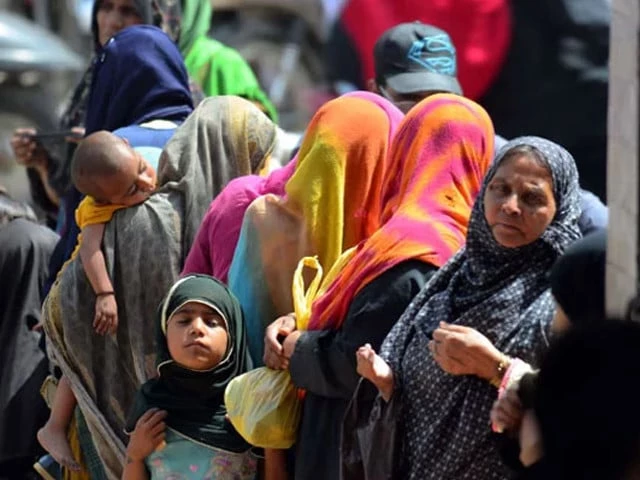
Rawalpindi Division's low-income families and widowed women face distress as Zakat Department suspends financial assistance for 14 months, affecting over 30,000 beneficiaries.
The Zakat Department in the Rawalpindi Division has suspended financial assistance to registered low-income families and widowed women during Eidul Azha, following a similar suspension of payments during Eidul Fitr due to an acute funding crisis. More than 30,000 registered beneficiaries across six districts—Rawalpindi, Murree, Attock, Chakwal, Talagang, and Jhelum—are currently deprived of Zakat support for the past 14 months.
Officials confirmed that no special Eid grant will be distributed this year, leaving thousands of deserving families in distress. Over the last 14 months, District Zakat Councils have also failed to issue scholarships to underprivileged students or provide financial aid to families of visually impaired individuals and leprosy patients. Free medical treatment, surgeries, and kidney dialysis services for poor patients at government hospitals have remained suspended due to a lack of Zakat funds.
Under the previous system, eligible families received monthly financial assistance of Rs2,000 either every month or every quarter, with special Eid grants ranging from Rs10,000 to Rs12,000 traditionally disbursed on Eidul Fitr and Eidul Azha. The last such payment was made during Eidul Fitr 2025, after which no financial aid has been provided due to the ongoing funding crisis.
Large numbers of women visit Zakat Council offices daily but return disappointed upon learning that funds are not available. At present, all six districts in the Rawalpindi Division, including Rawalpindi District, have been without permanent chairpersons of District Zakat Councils for the past two years, while several positions in other districts remain vacant for nearly three years.
There are 1,166 union councils in Rawalpindi District and approximately 3,500 local union councils across the division. These local Zakat committees were dissolved two years ago upon completion of their terms and are currently being run by temporary administrators. Affected beneficiaries, including Ruqaiya Bibi, Sakina Begum, and Gulfraz Bibi, have repeatedly visited Zakat Council offices since Eidul Fitr but received no assistance.
According to the women, office staff informed them that payments would be transferred through Easypaisa once funds became available. Despite these assurances, they continue to face financial hardships, highlighting the urgent need for a resolution of the funding gap and the resumption of Zakat support services.