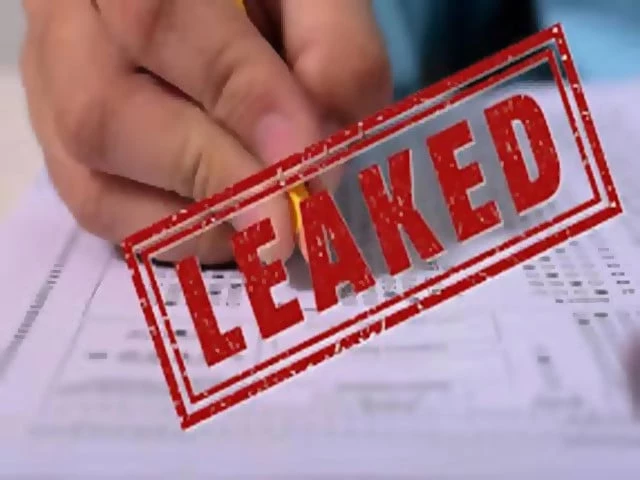
Public scrutiny intensifies over repeated reports of paper leaks during recent matriculation examinations in Peshawar, raising concerns about the fairness and transparency of the education system.
The recent matriculation examinations in Peshawar have come under intense public scrutiny as repeated reports of paper leaks dominated social media and drew strong criticism from parents and education experts. Haris Khan, a resident of Gulbahar, expressed serious doubts about the transparency of the recent Peshawar Board exams. "Almost every day there were reports of papers leaking," he said. "One day it would be one paper, and the next day another. Under such circumstances, how can anyone trust the fairness of the examination system or the marks awarded? The government should install cameras in all examination halls and adopt a stronger monitoring system to safeguard students' futures."
Shah Nawaz Khan, a professor at Islamia College Peshawar, described the paper leaks during the recent matric exams as a major blunder. He revealed that some private schools collude with authorities and administrators to purchase examination halls to secure high marks for their students. "These results are then used in advertisements to attract more parents into enrolling their children," he noted. Khan added, "In the past, such incidents of papers leaking before the scheduled time had never occurred in the Peshawar educational board. However, this time, within ten minutes of the start of each paper, the same paper was circulating on WhatsApp groups. This not only demonstrated the incompetence of board officials but also raised serious questions about the transparency of the government's education system."
Chairman of the Peshawar Board, Khuda Bakhsh, addressed these concerns, stating that although there were some reports of one or two paper leaks during the matric exams, claims that every paper was leaked were false. He claimed that action was taken against 24 teachers who were suspended after papers from one examination hall were leaked. "Strict action was taken against several examination centers and against cheating practices, hence no incident of paper leakage has so far occurred in the ongoing intermediate examinations," Bakhsh said. "Around 100,000 students and 6,000 invigilators are involved in the examination process, and sometimes some invigilators 'slip up' and share papers or multiple-choice questions with relatives. However, this year strict measures were implemented, and apart from one or two cases, no paper leaks had occurred."
On the other hand, some parents raised concerns about the newly implemented cluster system. Murad Ali Shah, a resident of Peshawar and a parent whose daughter was appearing in the 9th-grade exams, told The that the system created difficulties for many families as some students were allotted nearby examination centers while others were assigned faraway ones, causing significant inconvenience for parents.
Khuda Bakhsh believed that some people spread false news and misinformation on social media, which others circulate without verification despite lacking any truth. "Examination halls were shifted from private buildings to government buildings in order to better prevent cheating," he responded. Despite the assurances from the board chairman, the ongoing controversy highlights the need for greater transparency and stricter measures to ensure the integrity of future examinations.