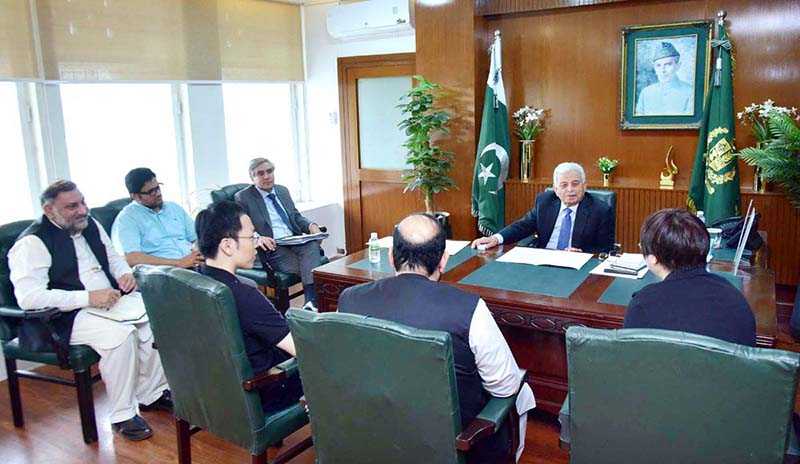
Federal Minister for National Food Security & Research Rana Tanveer Hussain recently chaired a significant meeting with a Chinese delegation to explore opportunities for cooperation in the livestock sector. The discussions focused on key areas such as buffalo embryo exports and the promotion of Pakistan's elite dairy breeds. This meeting marks an important step towards strengthening agricultural ties between the two countries and enhancing trade in the livestock sector.
The meeting highlighted the potential for mutual benefit through cooperation in livestock development, particularly in the areas of buffalo embryo exports and dairy breed improvement. Pakistan possesses a rich genetic resource of livestock, with several elite dairy breeds that can be promoted globally. The Chinese delegation expressed interest in importing buffalo embryos from Pakistan, which could lead to significant economic benefits for the country's livestock sector.
The promotion of Pakistan's elite dairy breeds is also a key area of focus, as these breeds have the potential to improve milk production and contribute to the country's dairy sector. The minister emphasized the need for collaborative efforts to enhance the productivity and quality of Pakistan's dairy sector, which can be achieved through the exchange of expertise, technology, and genetic resources with China. This cooperation can help Pakistan's dairy sector to become more competitive in the global market.
The meeting between the Federal Minister and the Chinese delegation is a positive development, indicating a willingness to enhance agricultural cooperation and trade between the two countries. As Pakistan seeks to diversify its exports and increase its agricultural production, cooperation with countries like China can play a vital role in achieving these goals. The minister's efforts to promote Pakistan's livestock sector and enhance trade ties with China are a step in the right direction, and it is expected that this cooperation will yield positive results for the country's agricultural sector in the future.