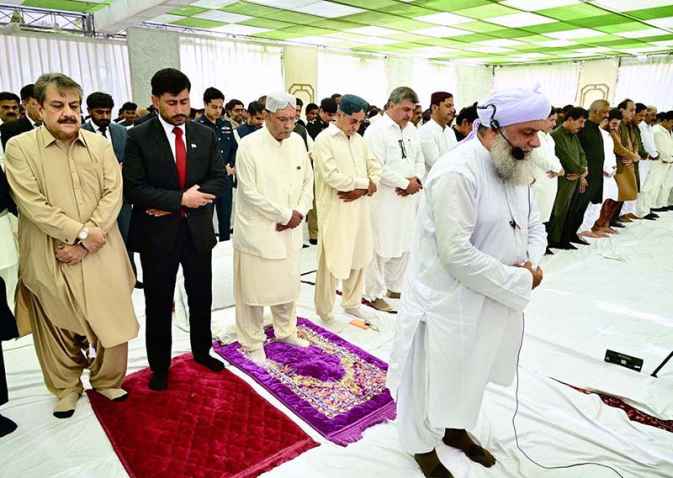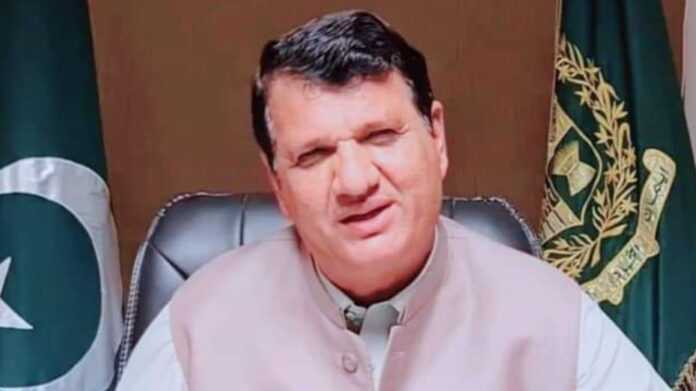
Federal Minister for Kashmir Affairs, Gilgit-Baltistan and SAFRON, Engineer Amir Muqam, offered Eid-ul-Azha prayers in his village Chagam, Shangla.
Federal Minister for Kashmir Affairs, Gilgit-Baltistan and SAFRON, as well as President of PML-N Khyber Pakhtunkhwa, Engineer Amir Muqam, recently led the Eid-ul-Azha prayers in his ancestral village, Chagam, located in Shangla district. This act of religious observance not only highlighted Muqam's deep-rooted connection to his community but also underscored his commitment to cultural and religious traditions.
The minister's presence at the local mosque for the prayer ceremony was significant as it brought together villagers from different backgrounds to celebrate this important Islamic festival. By participating in such communal activities, Muqam demonstrated his dedication to fostering unity and strengthening ties within the community. His involvement also served as an inspiration for other public figures to engage more closely with their roots.
Eid-ul-Azha is a day of sacrifice and reflection, where Muslims around the world commemorate Prophet Ibrahim's willingness to obey God’s command by sacrificing his son. The minister's act of offering prayers in Chagam reflects the importance of maintaining these traditions while also serving as a symbol of leadership and community service. His actions have likely resonated with local residents who appreciate his efforts to stay connected to their heritage.
This visit to his ancestral village is part of Muqam’s broader initiatives aimed at promoting social cohesion and cultural preservation in Khyber Pakhtunkhwa. By actively participating in such events, he reinforces the idea that public service should extend beyond political duties and include a deep sense of responsibility towards one's community and its traditions.
In conclusion, Engineer Amir Muqam's participation in the Eid-ul-Azha prayers in Chagam highlights his commitment to both religious observance and community engagement. His actions serve as an example for other leaders to follow, emphasizing the importance of maintaining cultural ties while fulfilling civic duties.