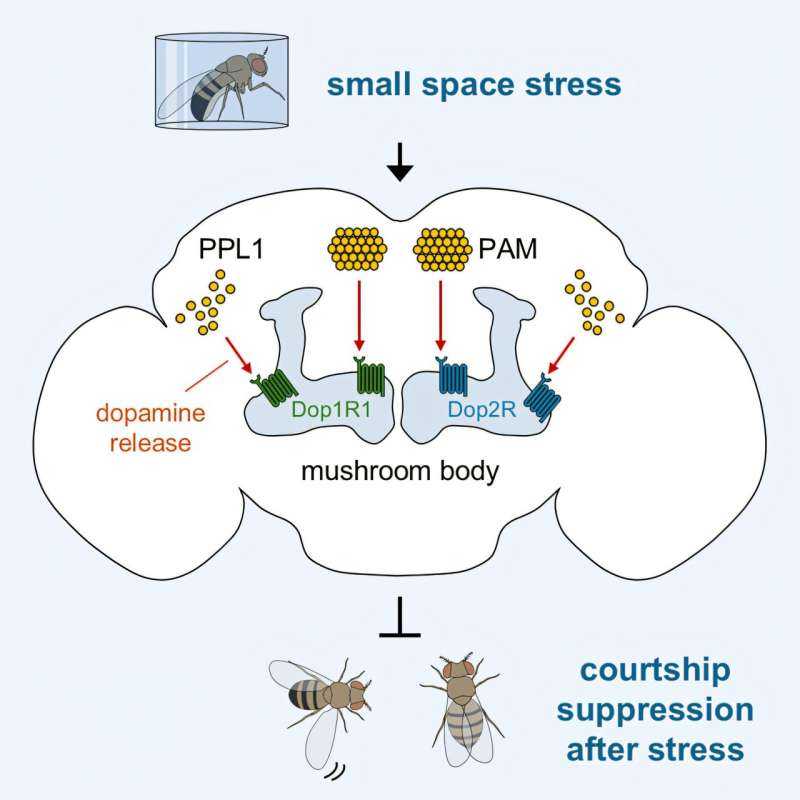
The connection between stress and sexual dysfunction has long been a topic of interest in the scientific community. Recently, a team of scientists from Tokyo Metropolitan University made a significant breakthrough in understanding this relationship. By conducting a study on Drosophila fruit flies, they were able to shed light on the biochemical pathways that link stress to sexual suppression.
The researchers focused on the effects of confinement on the fruit flies, specifically looking at how being trapped in a small space impacted their mating behavior. They discovered that the neurotransmitter dopamine played a crucial role in determining the duration of courtship suppression in male flies after they were released from confinement. However, it was dopamine was not responsible for the initial suppression of mating behavior.
The study's findings suggest that dopamine is involved in the lingering effects of stress on sexual behavior, rather than the initial response to stress. This distinction is important, as it highlights the complex nature of the relationship between stress and sexual dysfunction. The fact that dopamine is tied to the persistence of courtship suppression, rather than its onset, provides valuable insights into the biochemical mechanisms underlying this phenomenon.
The use of Drosophila fruit flies as a model organism allowed the researchers to explore the neural basis of stress-induced sexual suppression in a controlled and systematic manner. The results of this study have implications for our understanding of the effects of stress on sexual behavior in other organisms, including humans. Further research is needed to fully elucidate the mechanisms involved, but this study provides an important step forward in understanding the complex interplay between stress, dopamine, and sexual behavior.
The identification of dopamine as a key player in the lingering effects of stress on courtship behavior opens up new avenues for investigation into the treatment and management of stress-related sexual dysfunction. By exploring the biochemical pathways involved, researchers may be able to develop more effective interventions for individuals experiencing sexual suppression as a result of stress. The study's findings also underscore the importance of considering the long-term effects of stress on behavior, rather than just focusing on the immediate response to stressful stimuli.